
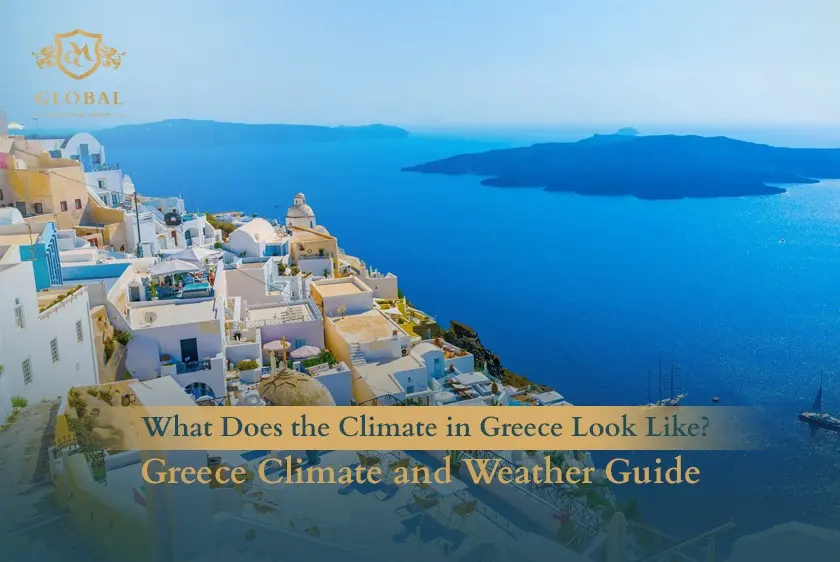
Greece has a predominantly Mediterranean climate, characterized by hot, dry summers and mild, wetter winters. However, due to the country’s complex geography, its climate is far from uniform. Greece is one of the most mountainous countries in Europe, with nearly 80% of its land covered by mountains, alongside an extensive coastline and thousands of islands. This combination creates a wide range of microclimates and local variations. According to the Köppen climate classification, Greece contains around 11 different climate types, an unusually high number for a country of its size. Key geographic elements influencing Greece’s climate include its mountainous mainland, surrounding seas (Aegean, Ionian, and Mediterranean), elevation differences, and seasonal wind systems such as the Boreas (cold northern winds) and Sirocco (warm southern winds).
Summer in Greece is hot and dry, characterized by long periods of sunshine and minimal rainfall, especially in July and August when temperatures often exceed 30 °C, with clear skies and refreshing sea breezes along the coast. Spring in Greece is mild and pleasant, characterized by gradually rising temperatures and blooming landscapes, especially in April and May, with comfortable weather and occasional light rain. Autumn in Greece is warm and temperate, characterized by lingering summer warmth and increasing rainfall later in the season, especially in September and October, with cooler evenings and favorable conditions for outdoor activities. Winter in Greece is mild and wetter, characterised by cooler temperatures and most of the annual rainfall, especially in coastal and lowland areas, with snowfall mainly limited to northern and mountainous regions.
Climate conditions vary noticeably across different parts of the country. Northern Greece (Macedonia, Thrace, Epirus) experiences colder winters, higher rainfall, and regular snowfall in mountainous areas. Cities like Thessaloniki have average winter temperatures around 6°C (43°F). Southern mainland Greece, including Athens and the Peloponnese, has milder winters and hotter summers, with average winter temperatures around 10°C (50°F). Crete and southern islands are warmer year-round, with winter averages around 12°C (54°F). Mountain regions experience much cooler conditions than nearby lowlands, with snow persisting in spring at high elevations. At the same time, coastal and sea level areas enjoy more moderate temperatures due to the sea’s regulating effect. The Ionian coast is wetter and greener, receiving significantly more rainfall than eastern and southern regions.
Overall, Greece’s climate offers long sunny periods, regional diversity, and mild conditions, making it suitable for year round living, travel, and outdoor activities, whether you prefer warm coastal weather, cooler mountain air, or seasonal variety.
What Does Summer Look Like in Greece?
Summer in Greece is hot, dry, sunny, and deeply outdoor oriented, shaping daily routines, work schedules, clothing choices, and social life across the country. It is the longest and most defining season, especially in southern regions and on the islands, and plays a major role in Greece’s lifestyle, tourism, and economy. Summer typically lasts from early June to mid-September (around 90 100 days), though in southern areas it can extend into late May and early October, making it feel like an extended season rather than a short peak.
Temperatures during summer vary by geography. Coastal and island areas usually experience average daytime temperatures of 28 32°C (82 90°F), while inland cities such as Athens and Thessaly often reach 32 38°C (90 100°F). Mountain regions are noticeably cooler, averaging 22 28°C (72 82°F). Nighttime temperatures remain warm, especially near the coast, typically 20 25°C (68 77°F), while mountain areas cool more significantly. Humidity is moderate to high near the sea and lower inland; rainfall is extremely limited, and snow is nonexistent except for permanent remnants at very high elevations.
One of the defining characteristics of Greek summer is intense sunshine. Greece receives some of the highest sunshine levels in Europe, ranging from under 1,600 hours (about 2 months) annually in mountainous Epirus to over 3,250 hours (about 4 and a half months) per year in southern Crete, with summer accounting for a large share of this exposure. This abundance of sun strongly contributes to the heat, dryness, and outdoor lifestyle that define the season and influence everything from architecture to daily schedules.
Summer conditions also vary noticeably across regions. Islands and coastal areas benefit from sea breezes that moderate heat, making temperatures feel more comfortable despite strong sun. Inland plains and large cities experience higher heat buildup due to limited airflow and dense urban structures. Mountainous regions remain cooler, particularly at night, and serve as popular summer escapes. In the Aegean Sea, the Meltemi winds lower humidity and temperatures but can occasionally disrupt ferry travel. These variations are driven by elevation, proximity to the sea, wind patterns, and terrain.
Daily life in Greece adapts naturally to the summer climate. Clothing is light, breathable, and minimal, with linen, cotton, light colors, sandals, hats, sunscreen, and sunglasses forming everyday essentials. Evenings remain warm, so layering is rarely necessary. Many businesses adjust working hours with earlier starts and longer afternoon breaks, particularly in smaller towns. Productivity often shifts to mornings and evenings, while midday hours slow down due to heat.
Social and recreational life in Greece flourishes in summer. Swimming becomes a regular routine; evenings are spent outdoors at cafés, seaside tavernas, and open-air cinemas, and festivals, weddings, village celebrations (panigyria), and nightlife reach their peak. At the same time, extreme heat can limit midday physical activity, especially outdoor labor and agriculture, and increase wildfire risk in dry regions. Overall, summer in Greece is intense yet deeply enjoyable defined by sun, sea, social connection, and a slower rhythm that adapts to the climate rather than resisting it.
What Is Winter Like in Greece?
Winter in Greece is generally mild, wet, and variable, with its character shaped strongly by geography and regional differences. Unlike northern Europe, winter does not dominate daily life across the entire country, but its impact varies noticeably between the north and south, mainland and islands, and coastal versus mountainous regions. Winter typically lasts from early December to late February (around 10 to 12 weeks), though colder conditions can extend into March in northern and high-altitude areas.
Temperatures during winter remain relatively moderate in most regions. In southern islands such as Crete, average daytime temperatures in January range from 12 14°C (54 57°F), while Athens and the southern mainland experience averages 9 12°C (48 54°F). Northern Greece, including Thessaloniki, is colder, with daytime temperatures around 5 8°C (41 46°F) and colder nights that can drop to 0 5°C (32 41°F). Humidity is moderate to high, especially in coastal and island regions, and winter is the wettest season of the year. Most precipitation falls as rain, particularly along the western mainland and Ionian Islands, while snow is common in mountainous regions and the northern mainland.
Regional differences are especially clear in winter. Coastal and island areas experience mild but rainy winters with frequent winds, allowing daily life to continue with minimal disruption. The Ionian Islands receive the highest rainfall in the country, remaining green throughout the year. In contrast, the northern mainland faces colder winters with more frequent frost and snowfall, while mountain regions see regular snow accumulation that supports ski resorts and winter tourism. Occasionally, cold air masses from Northern Europe or Russia move southward, causing sharp temperature drops. During these short-lived cold spells, snow can even fall in typically mild areas such as Athens or some islands.
Geographic factors play a major role in shaping winter weather. The Mediterranean Sea helps moderate temperatures in coastal areas, preventing extreme cold, while mountain ranges trap cold air and create snow prone zones. Northern winds (Boreas) bring cold, dry air from the Balkans, and Greece’s western exposure increases rainfall along the Ionian coast. These interacting elements explain why winter conditions can vary dramatically within short distances.
Daily life in Greece during winter adapts easily to the season. Clothing is practical but lighter than in colder climates, with jackets, sweaters, scarves, and waterproof coats commonly worn. Heavy winter gear is mainly reserved for northern and mountainous areas. Cities and coastal regions continue functioning normally, with cafés, tavernas, and cultural venues remaining central to social life. While rain may occasionally limit outdoor activities and strong winds can disrupt ferry schedules, everyday routines are rarely halted.
In winter, life in Greece shifts slightly indoors and toward tradition. Christmas and New Year celebrations focus on family and community, while mountain villages see increased activity due to skiing and winter sports tourism. Although swimming and some outdoor activities pause, winter in Greece adds a calmer, more reflective rhythm rather than shutting life down offering a quieter but equally authentic experience of the country.
What Is Spring Like in Greece?
Spring in Greece is one of the most pleasant and visually striking seasons, marked by mild temperatures, blooming landscapes, and a noticeable increase in outdoor activity. It represents a smooth transition from the cooler, wetter winter to the dry heat of summer and is widely considered one of the best times of year for both daily life and travel. Spring typically lasts from early March to late May (around 10 12 weeks), though in southern regions and islands it can feel springlike as early as February.
Temperatures during spring rise gradually and comfortably. Daytime temperatures usually range from 14 18°C (57 64°F) in March, 18 22°C (64 72°F) in April, and 22 26°C (72 79°F) in May. Nighttime temperatures remain cooler but pleasant, averaging 8 14°C (46 57°F). Humidity levels are moderate and comfortable, rainfall is generally light to moderate and steadily decreases as summer approaches, and snow is limited to high mountain elevations early in the season. Sunshine increases significantly without the intensity of summer, contributing to vibrant greenery and rapid plant growth across the country.
Southern Greece and the islands warm earlier during Spring, offering beach friendly days by April, while northern regions remain cooler longer and may experience late frosts. Mountainous areas stay cool, with lingering snow at higher elevations, and western Greece typically receives more rainfall than the east. These variations are influenced by latitude, elevation, proximity to the sea, and the gradual retreat of winter air masses.
Geographic and natural factors play a key role in shaping spring conditions. The weakening of winter low pressure systems, increasing solar radiation, longer daylight hours, and the moderating influence of surrounding seas all contribute to spring’s mild weather. Melting mountain snow feeds rivers and valleys, enhancing soil fertility, and supporting agricultural activity during this period.
Daily life becomes noticeably more active in spring. Clothing is layered and flexible, with light jackets, sweaters, and long sleeves common early in the season, and short sleeves appearing by late spring, especially in southern regions. People spend more time outdoors; cafés and public spaces fill up, and social gatherings increase. Work routines remain largely unaffected by weather, as conditions are rarely disruptive.
Spring is also a peak season for hiking, walking, outdoor dining, agricultural activities, and major religious celebrations, most notably Easter, which often falls during this time. Rather than limiting daily life, spring enhances it by offering mild weather, natural beauty, and longer days that make it one of the most balanced, enjoyable, and energizing seasons in Greece.
What Is Autumn Like in Greece?
Autumn in Greece is a gentle, transitional season marked by warm early weeks, cooler evenings, and the gradual return of rainfall after the dry summer. It is often considered one of the most comfortable seasons for daily life, offering pleasant temperatures, fewer crowds, and a noticeably calmer rhythm. Autumn typically lasts from mid-September to late November (around 10 11 weeks), though in southern regions and islands, autumn conditions can extend well into December.
Temperatures during autumn gradually cool but remain comfortable. Daytime temperatures average 24 28°C (75 82°F) in September, 18 24°C (64 75°F) in October, and 14 18°C (57 64°F) in November, while nighttime temperatures usually range from 10 16°C (50 61°F). Humidity levels are moderate and slowly increase as rainfall returns. Rainfall is generally light in early autumn but becomes more frequent in November, particularly in western regions. Snow is rare and limited to high mountain areas late in the season. The sea remains warm well into October, helping stabilize temperatures in coastal areas and extend the swimming season.
Regional differences are noticeable during autumn. Southern Greece and the islands stay warm longer, often maintaining beach friendly conditions through October. Northern Greece cools earlier and experiences more rainfall, while mountain regions feel autumn sooner, with cooler temperatures, fog, and early signs of winter at higher elevations. Western Greece and the Ionian Islands typically receive heavier rainfall earlier in the season due to exposure to Atlantic weather systems.
Geographic and natural factors shape autumn conditions across the country. The gradual return of Atlantic low-pressure systems brings increased cloud cover and rainfall, while warm sea temperatures continue to moderate coastal climates. As land surfaces cool, cloud formation increases, and seasonal wind patterns shift as strong summer winds weaken, contributing to autumn’s calmer atmosphere.
Daily life in Greece remains highly active during autumn. Clothing is layered and adaptable, with light jackets, cardigans, and long sleeves becoming common, while summer clothing is still widely worn in early autumn, especially in southern regions. Outdoor cafés, evening walks, and social gatherings continue, and work routines remain uninterrupted by weather conditions.
Autumn is also closely tied to harvest and tradition. Olive and grape harvests begin in rural areas, hiking and outdoor exploration peaks thanks to cooler temperatures; swimming continues in warmer regions, and cultural and food festivals celebrate seasonal produce. Rather than limiting daily life, autumn offers a balanced, comfortable climate that supports work, outdoor activities, and social engagement making it one of the most enjoyable seasons to live in Greece.
How Greece’s Geography Shapes Its Climate
Greece’s climate is not only Mediterranean at its core, but also deeply shaped by the country’s complex natural geography. Stretching across the southern Balkans and fringed by the Aegean, Ionian, and Mediterranean Seas, Greece’s extensive coastline moderates’ temperature extremes and promotes the characteristic pattern of hot, dry summers and mild, wetted winters seen in coastal and island areas. At the same time, the Pindus mountain range, which bisects the mainland, creates sharp climatic contrasts: regions west of the range receive higher precipitation and more maritime influence, while areas to the east are comparatively drier and subject to stronger summer winds. Northern and interior upland zones transition toward more continental and alpine conditions, with colder winters and greater seasonal temperature variation than the lowland Mediterranean zones. These geographic gradients, from sea to summit, explain why Greece displays a mosaic of microclimates ranging from typical Mediterranean to semi-arid and alpine types, despite its relatively small size.
How Does the Climate Vary Across Different Regions of Greece?
Greece’s climate varies significantly from region to region due to differences in latitude, elevation, proximity to the sea, and mountainous terrain. While the country is broadly Mediterranean, the geographic factors create distinct regional climate patterns across the mainland, islands, and coastal zones.
Mainland Greece
Mainland Greece shows the widest range of climate variation due to its size, elevation, and distance from the sea. Northern Greece (Macedonia, Thrace, and the Thessaloniki region) has a more continental climate, with cold winters and hot summers. Winter temperatures often range between 0 8°C (32 46°F), with frequent snowfall in mountainous areas such as the Pindus range and occasional snow even in cities during cold spells. Summers are warm to hot and dry, often exceeding 30°C (86°F), creating the strongest seasonal contrasts in the country. Central Greece, including Athens and Attica, has a classic Mediterranean climate, featuring mild winters (7 15°C / 45 59°F) with moderate rainfall and very hot, dry summers that frequently reach 35°C (95°F) or higher. Athens’ basins like geography can intensify summer heat. Southern Greece, including the Peloponnese and Crete, enjoys a warmer Mediterranean climate with long summers and short, mild winters. Winter temperatures range from 8 16°C (46 61°F), while summers are very hot and dry, often exceeding 35°C (95°F). Crete shows local variation, with mild coastal conditions year-round and cooler, sometimes snowy winters in mountainous inland areas.
Greek Islands
The Greek islands are strongly influenced by surrounding seas, resulting in milder winters and moderated summer heat. The Cyclades (Santorini, Mykonos, Naxos) have a dry Mediterranean island climate, with mild winters (10 15°C / 50 59°F) and hot, very dry summers around 30°C (86°F) or higher. The Meltemi winds provide cooling relief during summer. The Dodecanese (Rhodes, Kos), located in southeastern Greece, are among the warmest regions in the country, with very mild winters (12 17°C / 54 63°F) and hot, dry summers frequently exceeding 30°C (86°F), influenced by their proximity to Asia Minor. The Ionian Islands (Corfu, Kefalonia, Zakynthos) have a more humid and greener Mediterranean climate, experiencing mild but wet winters (10 15°C / 50 59°F) and warm summers (25 35°C / 77 95°F). Western weather systems bring higher rainfall, making these islands noticeably lush.
Coastal Areas and Seas
Coastal regions across Greece benefit from the moderating effect of the sea. Along the Aegean Coast and coastal mainland, winters are mild and wetter (10 15°C / 50 59°F), while summers are hot and dry, often exceeding 30°C (86°F), with sea breezes reducing temperature extremes. The Saronic Gulf area, including islands such as Hydra, Spetses, and Aegina, enjoys a mild Mediterranean climate with winter temperatures of 8 15°C (46 59°F) and hot, dry summers ranging from 30 35°C (86 95°F), making it well suited for year round living and short coastal escapes.
How Greece’s Weather Has Changed Over the Years
Greece has traditionally had a Mediterranean climate, characterized by mild and rainy winters, warm and dry summers, and abundant sunshine throughout the year. January and February have historically been the coldest months, while July and August are typically the hottest. However, over the past few decades, climate change and global warming have noticeably altered Greece’s weather patterns, affecting temperatures, rainfall distribution, and the frequency of extreme weather events.
Since the late 1990s, Greece has experienced a clear and measurable rise in average temperatures, with the most significant changes occurring during the summer months. Heatwaves have become more frequent, longer lasting, and more intense, particularly in urban and inland areas. Summers now tend to start earlier and extend later into the year, placing increased pressure on water resources, agriculture, energy demand, and public health systems. These prolonged hot periods have become one of the most visible signs of climate change in the country.
Rainfall patterns have also shifted. Greece has seen a general decline in annual and seasonal precipitation, especially during winter, which was traditionally the main rainy season. While total rainfall has decreased, summer rain events have slightly increased, often occurring as sudden and intense storms rather than steady rainfall. This change limits the soil’s ability to absorb water, increases the risk of flash flooding, and reduces effective groundwater replenishment, creating challenges for both agriculture and water management.
As temperatures rise and dry conditions become more common, extreme weather risks have increased. Wildfires are now more frequent and severe, particularly during prolonged summer heatwaves combined with strong seasonal winds. At the same time, irregular heavy rainstorms have heightened the risk of flash floods, especially in urban areas and regions with limited drainage infrastructure. These events tend to be localized but can cause significant environmental and economic damage.
The main drivers behind climate change in Greece mirror global trends. Population growth, increased urbanization, rising energy demand from households and industry, transport emissions, and agricultural expansion have all contributed to higher greenhouse gas emissions. Between 1990 and 2007, energy consumption in Greece increased by more than 57%. Although fossil fuels continued to dominate energy use during that period, the use of renewable energy sources and natural gas began to grow after 2000, signaling a gradual shift toward cleaner alternatives.
In response to these developments, Greece introduced the National Climate Change Programme in 1995, 2005, and 2007. These initiatives focused on reducing greenhouse gas emissions, improving energy efficiency, promoting cleaner transportation, adapting agricultural practices, improving waste management, and expanding research and development related to climate and sustainability.
Looking ahead, climate change has reshaped Greece’s weather toward hotter, drier, and more extreme conditions, particularly during summer. While Greece still enjoys a generally favorable climate compared to many regions worldwide, continued adaptation and sustainability efforts are becoming increasingly essential to protect ecosystems, preserve quality of life, and support long term economic and environmental resilience.
What Extreme Weather Events Is Greece Prone To?
While Greece is generally considered a safe country in terms of natural disasters, climate change has increased the frequency and intensity of certain extreme weather events. These events are usually seasonal, region specific, and manageable, but they are important to understand, especially for residents, expats, and long-term visitors. Some extreme weather events that Greece is prone to include:
- Heatwaves
- Wildfires
- Floods and Flash Flooding
- Drought
- Strong Winds
- Earthquakes
Heatwaves
Heatwaves are the most common extreme weather event in Greece, occurring mainly from June to August and sometimes extending into September. During peak events, temperatures can exceed 40°C (104°F), especially in inland and urban areas such as Athens, Thessaloniki, and major plains, where urban heat buildup intensifies conditions. These heatwaves affect daily life by shifting work hours to mornings and evenings, limiting midday outdoor activity, and significantly increasing energy demand for cooling.
Wildfires
Greece is moderately to highly prone to wildfires, particularly during the summer months. Fires most commonly occur in forested, rural, and semi urban areas, fueled by hot, dry conditions, prolonged drought, and strong winds such as the Meltemi. In recent decades, wildfire seasons have become longer and more intense, reflecting broader climate change trends. While wildfires can cause significant environmental and property damage, loss of life remains relatively low due to established evacuation protocols and emergency response systems.
Floods and Flash Flooding
Although Greece is generally a dry country, floods can occur during intense rainfall events, particularly in autumn and winter. These floods are often caused by short, heavy rainstorms rather than prolonged rainfall, especially after long dry periods when soil cannot absorb water effectively. Urban areas, river basins, and low-lying regions are more vulnerable, and flash floods can develop quickly. While flooding is usually localized, it can temporarily disrupt transport and infrastructure.
Drought
Certain regions of Greece experience seasonal or long-term drought, particularly in the southern mainland and on islands with limited freshwater resources. These areas are more vulnerable due to low rainfall, long dry summers, and increased water demand during peak seasons. Drought can impact agriculture, water supply, and local ecosystems, but it is generally managed through reservoirs, desalination of plants on islands, and water conservation measures. While drought is a recurring challenge, Greece has systems in place to reduce its impact on daily life.
Strong Winds
Greece frequently experiences strong seasonal winds, which play an important role in shaping weather conditions throughout the year. The Meltemi winds dominate the Aegean during summer, helping to cool temperatures and reduce humidity, but they can also increase wildfire risk and disrupt sea travel. In winter, storm systems bring strong gusts, particularly to coastal and island areas. While these winds may affect ferry schedules and outdoor activities, they are rarely dangerous on land and are a well understood part of Greece’s climate.
Earthquakes (Low Fatality Risk)
Greece lies in a seismically active region, which means earthquakes occur relatively frequently. However, the vast majority of these are small to moderate in strength and rarely cause serious damage. Thanks to strict modern building codes, improved construction standards, and strong public awareness, earthquake related fatalities are uncommon. As a result, while earthquakes are part of Greece’s natural environment, they pose a low risk to daily life for residents and visitors.
What Is the Best Place to Live in Greece for a Good Climate?
Choosing the best place to live in Greece for climate depends on what you value most: mild winters, manageable summers, sea breezes, or year-round sunshine. Thanks to Greece’s geographic diversity, several cities and islands offer balanced, comfortable climates that support outdoor living and a high quality of life throughout the year. Generally, coastal areas and southern regions provide the most stable and pleasant conditions.
Some of the best places in Greece known for their favorable climate include:
- Chania (Crete): One of the most balanced climates in Greece, with mild winters, warm but manageable summers, sea breezes, and easy access to mountains and beaches
- Heraklion (Crete): Warmer and sunnier year-round, ideal for those who prefer long summers and mild winters
- Athens Riviera (Glyfada, Voula, Vouliagmeni): Combines urban amenities with coastal cooling effects, making summers more comfortable than central Athens
- Corfu: Offers milder summers and lush greenery due to higher rainfall, appealing to those who prefer a greener environment
- Naxos: A Cycladic island with steady winds that reduce summer heat and mild winters, suitable for year-round island living
- Rhodes: One of the warmest regions in Greece, ideal for people who enjoy sunshine and shorter winters
- Volos: Provides a unique balance of sea and mountain climates, offering seasonal variety without extreme temperatures
What to Wear in Various Seasons in Greece
What you wear in Greece largely depends on the season, location, and daily activities. The country’s Mediterranean climate allows for light, practical clothing most of the year, with some adjustments for cooler winters, mountainous regions, and urban settings. Below is a seasonal guide to help you dress comfortably and appropriately.
Spring (March May)
Spring weather in Greece is generally mild but can be changeable, especially in the early months. Key clothing items to consider include:
- Light layers (long sleeve tops, cardigans, thin sweaters)
- Light jacket or windbreaker
- Comfortable walking shoes or sneakers
- Scarf for cooler mornings and evenings
- Sunglasses and a compact umbrella
Summer (June August)
Summers are hot, sunny, and dry, especially in cities and islands. Key clothing items to consider include:
- Lightweight, breathable fabrics (cotton, linen)
- Short sleeves, dresses, shorts, skirts
- Sandals or breathable shoes
- Sun protection: hat, sunglasses, sunscreen
- Swimwear for beaches and island trips
(For cities and churches, avoid overly revealing clothing during daytime outings.)
Autumn (September November)
Autumn starts warm and gradually cools, with occasional rain later in the season. Key clothing items to consider include:
- Light layers and long sleeves
- Cardigans or light jackets
- Comfortable closed shoes
- Light scarf
- Rain jacket or umbrella, especially in November
Winter (December February)
Winters are mild in most regions but colder in the north and mountains. Key clothing items to consider include:
- Warm layers (sweaters, long sleeve tops)
- Medium weight coat or jacket
- Closed shoes or boots
- Scarf and light gloves (especially in northern areas)
- Waterproof outerwear for rainy days
Regional Notes
- Islands and coastal areas: Windproof layers are useful year round
- Mountain and northern regions: Heavier winter clothing may be needed
- Urban areas: Smart casual attire is common, especially in cities like Athens and Thessaloniki
Can You Go to the Beach and Get into the Sea in Greece All Year?
Yes, you can go to the beach in Greece all year, but getting into the sea depends on the season, location, and personal tolerance to cold. Greece’s climate and sea temperatures vary across the year, making swimming common for much of the year, especially in southern regions and islands.
How Weather Look Like in Greece?
Greece experiences a Mediterranean climate with mild, wetted winters and hot, dry summers, along with long daylight hours throughout most of the year. Below is a month-by-month overview of Greece’s average weather conditions, including temperature, rainfall, and daylight hours. These figures represent national averages and may vary slightly by region (north vs south, mainland vs islands).
| Month | Average Temperature | Average Rainfall | Average Daylight Hours |
| January | 55°F (13°C)
|
2.2 in (56 mm) | 9.5 hours |
| February | 56°F (13.5°C)
|
2.1 in (53 mm) | 10.5 hours
|
| March | 60°F (15.5°C)
|
2.4 in (61 mm)
|
11.5 hours |
| April | 68°F (20°C)
|
2.0 in (51 mm)
|
13 hours
|
| May | 77°F (25°C)
|
2.2 in (56 mm)
|
14 hours
|
| June | 86°F (30°C)
|
1.6 in (41 mm) | 15 hours
|
| July | 91°F (33°C)
|
1.2 in (30 mm)
|
15 hours
|
| August | 90°F (32°C)
|
0.8 in (20 mm)
|
14 hours
|
| September | 83°F (28°C)
|
1.8 in (46 mm)
|
12.5 hours |
| October | 73°F (23°C)
|
2.3 in (58 mm)
|
11.5 hours
|
| November | 64°F (18°C)
|
2.6 in (66 mm) | 10.5 hours
|
| December | 55°F (13°C)
|
2.8 in (71 mm)
|
9.5 hours
|
What Is the Coldest Month in Greece?
The coldest month in Greece is typically January, followed closely by February. During this time, average temperatures range from 5 10°C (41 50°F) in northern and inland areas and around 10 13°C (50 55°F) in southern regions and islands. While winters are generally mild, northern Greece and mountainous areas can experience frost and snowfall, whereas coastal and island areas remain relatively warmer.
What Is the Hottest Month in Greece?
The hottest month in Greece is typically July, with August following closely behind. Average daytime temperatures often range between 30 35°C (86 95°F), and during heatwaves they can exceed 40°C (104°F), especially inland and urban areas. Coastal regions and islands are slightly cooler due to sea breezes, but July remains the peak of summer heat across the country.
What Is the Hottest City in Greece?
Athens is widely considered the hottest city in Greece, especially during the summer. Its location in a basin surrounded by mountains traps heat, causing temperatures to regularly exceed 35°C (95°F) and sometimes rise above 40°C (104°F) during heatwaves. The urban heat island effect further intensifies summer conditions, making Athens hotter than many coastal cities and islands, which benefit from cooling sea breezes.
What Is the Coldest City in Greece?
Florina, located in northwestern Greece, is considered the coldest city in the country. Due to its high elevation and continental climate, winter temperatures frequently drop below 0°C (32°F), and snowfall is common and long lasting. Florina experiences harsher winters than most other Greek cities, with colder nights and stronger seasonal contrasts compared to coastal and southern regions.
What is the highest recorded temperature in Greece?
The highest recorded temperature in Greece is 48.0°C (118.4°F). It was recorded on 10 July 1977 in Elefsina (near Athens) and in Tatoi, both located in the Attica region. This extreme heat was caused by an intense summer heatwave, combined with hot continental air masses, low humidity, and local geographic effects such as basins like terrain and downslope (foehn type) winds that amplify temperatures.
What Is the Lowest Recorded Temperature in Greece?
The lowest recorded temperature in Greece is −27.8°C (−18°F), measured in Ptolemaida, a city in northern Greece, in January 1963. This extreme cold was caused by a powerful continental cold wave from Eastern Europe and Siberia, combined with Ptolemaida’s high elevation, inland location, and basin like geography, which allowed cold air to settle. Such extreme temperatures are rare in Greece and occur only during exceptional winter weather events in northern inland regions.
Does it snow in Greece in winter?
Yes, it snows in Greece during winter, but snowfall is mainly limited to northern regions, inland areas, and mountainous zones. Cities in northern Greece and higher elevations often experience regular snowfall, while popular southern cities and islands usually see rain instead of snow. In rare cold waves, snow can even fall in places like Athens, but these events are short lived and uncommon.
Is Greece a Hot or Cold Country?
Greece is generally considered a warm country, thanks to its Mediterranean climate. It has long, hot summers and mild winters, especially in coastal and southern regions. While northern and mountainous areas can be cold in winter, most of the country enjoys moderate temperatures year-round, making Greece much warmer than many other European countries.
How Does the Climate in Greece Vary from Portugal?
Greece and Portugal both enjoy relatively warm European climates, but they differ in climate regions, rainfall patterns, and seasonal intensity. Greece has a predominantly Mediterranean climate, while Portugal combines Mediterranean and Atlantic (maritime) influences, especially along its western coast.
Greece experiences hotter, drier summers and generally less rainfall, particularly in the east and on the islands. Portugal, influenced by the Atlantic Ocean, has milder summers, cooler winters, higher humidity, and more frequent rainfall, especially in the north and along the coast. Greece also receives significantly more sunshine overall.
In summary, Greece’s climate is warmer, sunnier, and drier, while Portugal offers a cooler, more humid, and rainier climate with fewer temperature extremes but less consistent sunshine.
Final thoughts
Greece’s climate stands out for its balance, diversity, and livability. With long sunny summers, mild winters, clear seasonal variation, and regional options ranging from coastal islands to cooler mountain cities, Greece offers a climate that supports an active, outdoor focused lifestyle year-round. Compared to many other countries, its weather is more predictable, less extreme, and closely aligned with quality of life, wellbeing, and sustainable living.
If you’re considering relocating, investing, or securing residency or citizenship in Greece, GICG (Global for Citizenship and Residency) is here to help you navigate every step with confidence. Our experienced team provides tailored guidance, clear pathways, and end-to-end support to help you choose the option that best fits your lifestyle and long-term goals.
Contact GICG today to explore your opportunities and start building your future in Greece.