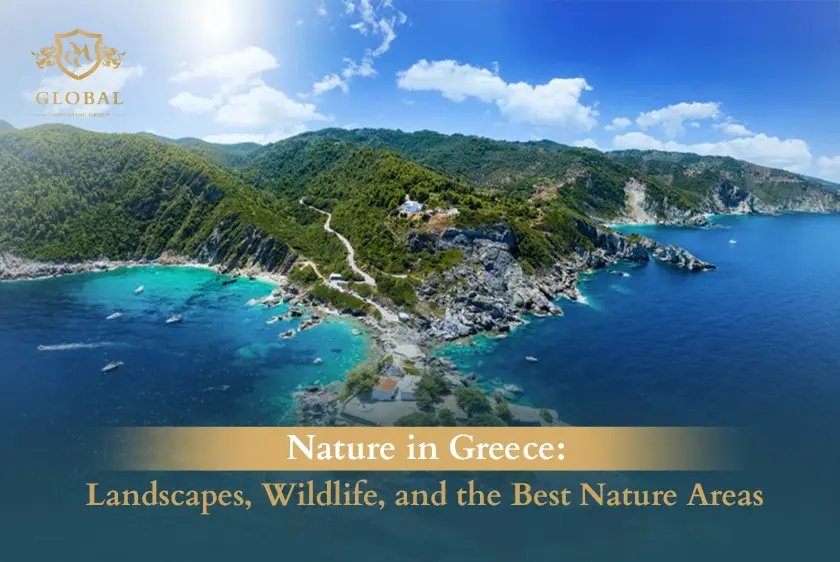
Greece is a country where nature plays a central role in daily life and national identity, offering a landscape that is far more diverse than you may expect. Rather than being dominated by large industrial cities, Greece is rich in natural areas, with a geography shaped by mountains, coastlines, islands, forests, and fertile valleys. Over 80% of the country is mountainous, while thousands of kilometers of coastline and more than 6,000 islands and islets create an extraordinary mix of land and sea. This balance gives Greece a strong connection to the outdoors, where nature is accessible, visible, and deeply integrated into everyday living. From rugged peaks and deep gorges to turquoise beaches and olive-covered hills, Greece’s natural landscape reflects a Mediterranean character that values open space, sunlight, biodiversity, and harmony with the environment rather than dense urban industrialization.
Natural Landscape of Greece
Greece has one of the most diverse natural landscapes in Europe, shaped by its unique geography and long relationship with the land. The country covers about 131,957 km², and its terrain is predominantly natural rather than urban or industrial. Mountains dominate nearly 80% of Greece’s land area, making it one of the most mountainous countries in Europe. Ranges such as the Pindus Mountains run through the mainland, while Mount Olympus stands as the country’s highest peak. Alongside mountains, Greece has extensive coastlines stretching over 13,600 km, one of the longest in the world, and more than 6,000 islands and islets, of which around 200 are inhabited. Forests, shrublands, and agricultural land cover a significant portion of the country, with roughly 50–60% of the land used for forests, grazing, and agriculture, including olive groves, vineyards, and farmland. Rivers are generally short due to the mountainous terrain, but lakes, wetlands, and fertile valleys play an important ecological role.
Nature is not limited to remote areas in Greece; it is spread throughout the country, though its form varies between cities and villages. Rural areas and islands are deeply connected to the natural environment, with open landscapes, farmland, forests, and sea views often integrated into daily life. Villages tend to blend seamlessly with nature, using local materials and traditional architecture that respects the surrounding landscape. Cities, especially Athens and Thessaloniki, are more densely built, but even there, nature remains visible through nearby mountains, coastal access, and green spaces. Modern development and technology have expanded urban areas, sometimes putting pressure on the natural landscape, yet strict zoning in many regions and traditional building styles, such as low-rise structures, stone houses, and whitewashed island homes, help preserve the visual harmony between architecture and nature rather than completely overriding it.
Seasonal changes strongly shape Greece’s natural environment. Spring brings lush greenery, blooming wildflowers, and mild temperatures, making the countryside vibrant and fertile. Summers are typically hot and dry, especially in southern regions and the islands, with golden landscapes and an increased risk of wildfires in forested and rural areas. Autumn sees cooler temperatures and agricultural harvests, while winter transforms northern Greece and mountainous regions with snowfall, particularly in areas like Epirus, Macedonia, and Mount Olympus. This seasonal contrast adds to Greece’s ecological richness, offering everything from snowy peaks to sun-drenched beaches within the same country.
Top Islands in Greece
Greece is home to one of the largest island networks in the world, with over 6,000 islands and islets scattered across the Aegean and Ionian Seas, though only about 200 are inhabited. These islands are grouped into regions such as the Cyclades, Ionian Islands, Dodecanese, Sporades, and the islands of Crete and the North Aegean. Each group has its own natural character, shaped by climate, terrain, and history. While some islands are known for nightlife and tourism, many are celebrated for their untouched landscapes, biodiversity, and strong connection to nature.
- Crete: Greece’s largest island, offering dramatic mountain ranges, deep gorges like Samaria, fertile valleys, and diverse beaches, making it one of the richest islands in terms of natural variety
- Corfu: Known for its lush greenery, forests, rolling hills, and freshwater streams, influenced by higher rainfall compared to other Greek islands
- Naxos: Combines fertile agricultural land, mountains, traditional villages, and long sandy beaches, offering a balanced natural environment
- Zakynthos: Famous for turquoise waters, sea caves, and protected marine areas, including nesting grounds for endangered loggerhead turtles
- Kefalonia: Features rugged mountains, underground lakes, dramatic cliffs, and dense pine forests, ideal for nature lovers
- Ikaria: Known for its wild landscapes, thermal springs, and minimal development, offering a raw and authentic natural setting
- Alonissos: Part of a protected marine park, rich in marine life, clear waters, and forested terrain, emphasizing conservation and biodiversity
Major Mountains of Greece
Mountains are a defining feature of Greece’s natural landscape, covering nearly 80% of the country and shaping its climate, biodiversity, and outdoor lifestyle. Greek mountains are not only significant for their height and dramatic scenery but also for the activities they support, from hiking and skiing to wildlife observation and cultural exploration. Key mountains in Greece include:
- Mount Olympus: The highest mountain in Greece at 2,917 meters, famous in both nature and mythology as the home of the ancient Greek gods; it offers alpine landscapes, rich biodiversity, and popular hiking routes
- Pindus Mountain Range: Often called the “backbone of Greece,” stretching across the mainland with deep gorges, dense forests, and traditional stone villages; ideal for trekking and nature exploration
- Mount Taygetos: Located in the Peloponnese, known for its rugged terrain, dramatic peaks, and panoramic views, popular with hikers and nature enthusiasts
- Mount Parnassus: Home to one of Greece’s main ski resorts, combining winter sports with archaeological sites such as Delphi and diverse natural scenery
- Mount Smolikas: The second-highest mountain in Greece, featuring alpine lakes, rich wildlife, and remote landscapes favored by experienced hikers
- Mount Pelion: Famous for its lush forests, stone villages, and the rare combination of mountain trails and nearby beaches, offering year-round natural beauty
Climate in Greece
Greece has a predominantly Mediterranean climate, characterized by hot, dry summers and mild, wetter winters. However, the country’s varied geography creates noticeable climate differences between regions. Factors such as latitude, elevation, and proximity to the sea shape distinct climate zones across the mainland and islands.
In the mainland, climate conditions vary between the north and the south. Northern Greece experiences colder winters, more rainfall, and regular snowfall, especially in regions like Macedonia, Thrace, and Epirus. Temperatures can drop significantly in winter, and mountain areas often remain snow-covered for months. In contrast, southern mainland Greece, including areas like Attica and the Peloponnese, has milder winters and hotter, drier summers, with less frequent snow and more sunshine year-round.
The Greek islands generally enjoy a more moderate climate compared to inland areas. Surrounded by the sea, islands experience cooler summers and milder winters, with sea breezes helping regulate temperatures. The Aegean islands are known for strong summer winds (meltemi), which provide relief from heat, while the Ionian islands receive more rainfall and are greener throughout the year.
Climate differences are also clear between coastal and mountainous regions. Coastal areas tend to have stable, mild conditions with fewer temperature extremes, making them comfortable year-round. Mountainous regions, however, have cooler temperatures, higher precipitation, and significant snowfall in winter. These contrasts allow Greece to offer a wide range of climates from sunny beaches to alpine environments within a relatively small geographic area.
Wildlife and Animals in Greece
Greece is home to a rich and varied range of wildlife, shaped by its mountains, forests, wetlands, and extensive coastline. While the country does not have dangerous or extreme wildlife commonly found in places like Australia, it does have several iconic and regionally distinctive animals that are closely tied to its natural landscape. Wildlife in Greece is generally subtle and integrated into rural and coastal life rather than highly visible in urban areas.
On land, Greece’s mountainous and forested regions support animals such as brown bears, wolves, wild boar, foxes, and deer, particularly in northern and remote mainland areas like Epirus and Macedonia. These animals tend to avoid human settlements and are rarely encountered in cities. In rural villages, wild boar are the most commonly seen large mammals, sometimes appearing near farmland or forest edges. Smaller animals such as hedgehogs, rabbits, and lizards are widespread and frequently spotted in gardens and countryside areas.
Greece’s seas are equally important to its wildlife identity. The country is known for loggerhead sea turtles (Caretta caretta), which nest on protected beaches like Zakynthos, as well as Mediterranean monk seals, one of the world’s rarest marine mammals, found along remote coastlines and islands. Dolphins and various fish species are common in Greek waters, reinforcing the strong connection between marine life and coastal living.
Birdlife is another highlight, with Greece serving as a key migration route between Europe and Africa. Wetlands and lakes host flamingos, pelicans, herons, and birds of prey, while islands and cliffs are home to seabirds. Overall, Greece’s wildlife is diverse but generally non-threatening, coexisting quietly with human life and contributing to the country’s reputation as a safe, nature-rich environment.
Plants and Vegetation in Greece
Greece’s plant life is exceptionally rich, thanks to its varied climate, mountainous terrain, and long coastline. The country is considered one of Europe’s biodiversity hotspots, with thousands of plant species adapted to Mediterranean conditions. Vegetation in Greece ranges from dense mountain forests to coastal shrubs and dry island flora, creating a diverse and resilient natural ecosystem.
Greek forests vary by elevation and region. In lowland and coastal areas, Mediterranean forests and shrublands dominate, featuring olive trees, pine forests, cypress, and evergreen bushes such as maquis and phrygana. At higher elevations, especially in northern and mountainous regions, deciduous and coniferous forests are common, including oak, beech, fir, spruce, and chestnut trees. These forests play a vital role in soil protection, water regulation, and wildlife habitats.
Greece is also home to a wide range of plant types, including aromatic herbs like oregano, thyme, sage, rosemary, and lavender, which grow naturally across hillsides and islands. Agricultural plants such as olive trees, grapevines, citrus, and figs shape much of the countryside and are deeply tied to Greek cuisine and rural life.
Notably, Greece has a high number of endemic species, meaning plants that grow nowhere else in the world. There are over 1,400 endemic plant species, many found in isolated mountain ranges and islands. Examples include rare wildflowers, alpine plants, and unique orchids. Crete alone hosts hundreds of endemic species due to its long geographic isolation. This botanical diversity makes Greece especially important for conservation and highlights its deep natural richness beyond its famous beaches.
Coastal and Marine Landscape of Greece
Greece has one of the most extensive and diverse coastal and marine landscapes in the world, shaped by its geography, climate, and close relationship with the sea. The country boasts over 13,600 kilometers of coastline, featuring a wide variety of coastal types, including sandy beaches, rocky shores, dramatic cliffs, coves, lagoons, and pebbled bays. Greece is bordered by the Aegean Sea to the east, the Ionian Sea to the west, and the Mediterranean Sea to the south, each offering distinct water conditions, colors, and marine ecosystems.
Beyond its coastlines, Greece has notable lakes, rivers, gorges, and waterfalls that add to its water-rich landscape. Freshwater lakes such as Lake Plastiras, Lake Pamvotida, and Prespa Lakes support wildlife and local communities, while gorges like Samaria Gorge in Crete, one of Europe’s longest, cut through dramatic mountain terrain. Waterfalls, though less common due to the dry climate, appear mainly in northern and mountainous regions, especially in Epirus and Macedonia, where rainfall is higher.
Greek waters are internationally known for their clarity and purity, thanks in large part to low levels of nutrients and sediment, which reduce algal growth and create the crystal-clear visibility iconic to the coastline. According to the European Environment Agency’s 2024 assessment, around 97 % of Greece’s coastal bathing waters were classified as “excellent” for cleanliness and safety, placing the country among the top five in Europe for bathing water quality. The high standards are also reflected in the Blue Flag program, where Greece currently has over 625 awarded beaches and 18 marinas, making it second in the world for the number of certified clean and well-managed coastal sites. These rankings not only underline the exceptional water quality but also highlight how Greece’s marine landscape supports safe, enjoyable swimming and water activities year after year.
This clarity supports a strong swimming culture, with locals swimming regularly from late spring through early autumn and often well into winter in milder regions. Water-based activities are deeply embedded in Greek lifestyle and tourism, including snorkeling, scuba diving, free diving, sailing, kayaking, windsurfing, and paddleboarding. Whether for leisure, sport, or daily routine, the sea is an essential part of life in Greece, shaping both its natural environment and cultural identity.
Natural Hazards in Greece
Greece’s natural beauty is shaped by its geography, but this same geography also makes the country prone to certain natural hazards. While most of these risks are manageable and relatively low in fatality, they are important to understand, especially for residents, expats, and long-term visitors. Overall, Greece is considered a safe country in terms of natural disasters, with strong building standards and well-established response systems.
One of the most common natural hazards in Greece is earthquakes. The country lies in a seismically active region, making small to moderate earthquakes fairly frequent. However, most are low in magnitude and rarely cause serious damage or loss of life. Strict building regulations and modern construction practices have significantly reduced risk, particularly in urban areas.
Summer wildfires are another recurring hazard, especially during hot, dry months. Forested and rural areas are most affected, particularly during heatwaves combined with strong winds. While wildfires can be destructive to ecosystems and property, they are usually localized and closely monitored by emergency services.
Some regions of Greece also experience drought conditions, particularly in southern mainland areas and certain islands where rainfall is limited. This affects agriculture and water resources but is generally managed through conservation practices and infrastructure.
Finally, strong seasonal winds, especially the Meltemi winds in the Aegean Sea during summer, can impact daily life. These winds help cool temperatures but can disrupt ferry schedules, increase wildfire risk, and create rough sea conditions. Despite these natural challenges, Greece’s preparedness and climate resilience make everyday life largely unaffected for most residents.
How Nature Is Integrated into Daily Life in Greece
Nature in Greece is not something reserved for remote trips or special occasions; it is woven directly into everyday life. Thanks to the country’s geography and settlement patterns, natural elements are rarely far from residential areas. Mountains often rise just outside city centers, coastlines are easily accessible from towns and villages, and green spaces, olive groves, or farmland frequently border homes, especially outside major urban areas. Even in large cities like Athens and Thessaloniki, residents live within a short distance of beaches, hills, forests, or mountain trails, creating a constant visual and physical connection to nature.
This proximity strongly shapes daily lifestyle habits. Swimming is a regular activity during warmer months, with many locals visiting the sea before or after work. Hiking and walking are popular year-round, especially in mountainous and rural regions, while weekends often include trips to villages, forests, or the coast. Camping, picnics, and outdoor dining are common ways Greeks enjoy nature socially, blending leisure with connection. Seasonal activities also play a role: mountain areas support winter sports, while spring and autumn are ideal for outdoor exploration.
Overall, nature in Greece is not treated as a separate escape from daily life but as an extension of it. The close relationship between homes, communities, and natural landscapes encourages an outdoor-oriented lifestyle that supports well-being, social interaction, and a strong appreciation for the environment.
Best Cities and Islands for Nature-Focused Living in Greece
Greece offers many places where daily life is closely connected to nature, making it especially attractive for those seeking a slower pace, outdoor access, and natural beauty without sacrificing modern comforts. Nature-focused living in Greece is not about isolation, but about balance, where cities, towns, and islands are naturally integrated with mountains, coastlines, forests, and traditional landscapes rather than dense urban development.
- Ioannina (Mainland): Surrounded by mountains and forests and set beside Lake Pamvotis, Ioannina offers immediate access to hiking trails, rivers, and alpine scenery. Nature is present year-round, shaping a calm, outdoor-oriented lifestyle.
- Volos (Mainland): A rare blend of seaside living and mountain access, Volos sits at the foot of Mount Pelion. Residents can move from beaches to forested mountain trails and stone villages within minutes.
- Chania (Crete): Combines urban life with dramatic natural surroundings, including beaches, gorges like Samaria, and nearby mountain villages. Nature is woven into everyday routines rather than reserved for weekends.
- Crete (Island): Greece’s most diverse natural landscape, featuring mountains, forests, fertile plains, gorges, and long coastlines. Ideal for those who want space, variety, and year-round outdoor living.
- Naxos (Island): Known for its agricultural land, traditional villages, and mountain interior, Naxos offers a quieter island lifestyle with strong ties to nature and fewer crowds than other Cycladic islands.
- Corfu (Island): Lush, green, and forested, with freshwater springs, rolling hills, and extensive olive groves. Its landscape feels closer to mainland Europe while maintaining island charm.
- Ikaria (Island): Rugged, mountainous, and lightly developed, Ikaria attracts those seeking a slow, nature-centered lifestyle focused on hiking, swimming, and community living.
- Alonissos (Island): Strongly protected and environmentally focused, with clear waters, pine forests, and limited development. Ideal for those seeking peaceful, nature-driven island living.
Best Natural Areas to Visit in Greece
Greece offers an extraordinary range of natural areas that go far beyond its famous beaches. From dramatic mountain ranges and deep gorges to pristine lakes and protected marine parks, the country’s natural sites highlight its rich biodiversity and varied geography. These areas are ideal for travelers and residents alike who want to experience Greece’s wild, untouched side.
Some of the best natural areas to visit in Greece include:
- Samaria Gorge (Crete): One of Europe’s longest gorges, featuring towering cliffs, rare flora, and hiking routes through protected national park land
- Vikos Gorge (Epirus): Among the deepest gorges in the world, known for breathtaking views, stone villages, and unspoiled mountain landscapes
- Mount Olympus National Park: Home to Greece’s highest peak, offering alpine scenery, diverse ecosystems, and legendary cultural significance
- Prespa Lakes National Park: A protected wetland area shared with neighboring countries, rich in birdlife, tranquility, and natural beauty
- Zagori Villages and Pindus Mountains: Famous for stone bridges, forests, rivers, and traditional architecture blended into the landscape
- Navagio Beach (Zakynthos): A striking cove with turquoise waters and dramatic limestone cliffs, representing Greece’s coastal beauty
- Meteora: Towering rock formations surrounded by nature, combining dramatic landscapes with unique cultural and spiritual heritage
- Alonissos Marine Park: A protected marine area known for clear waters, biodiversity, and the endangered Mediterranean monk seal
These natural areas showcase Greece’s balance of land and sea, offering unforgettable experiences for nature lovers, adventurers, and those seeking a peaceful connection with the environment.
What Is the Most Famous Tree in Greece?
The olive tree is the most famous and culturally significant tree in Greece. It is deeply rooted in Greek history, mythology, economy, and daily life, making it far more than just a plant; it is a national symbol. Olive trees have been cultivated in Greece for over 6,000 years, and many ancient groves are still producing olives today.
In Greek mythology, the olive tree was a gift from the goddess Athena, symbolizing peace, wisdom, and prosperity. This connection established the olive tree as sacred, and it has remained a powerful cultural emblem ever since. Practically, olive trees dominate the Greek landscape, especially in regions like Crete, the Peloponnese, and Central Greece, shaping both rural scenery and local livelihoods.
Beyond symbolism, the olive tree represents longevity, resilience, and continuity, values strongly associated with Greek identity. Olive oil is a cornerstone of Greek cuisine and Mediterranean living, while olive branches continue to symbolize peace and victory. Whether seen in ancient ruins, village hillsides, or modern farms, the olive tree remains the most iconic and enduring natural symbol of Greece.
National Parks and Protected Areas in Greece
Greece places strong importance on protecting its natural heritage, with an extensive network of national parks, nature reserves, and protected areas that preserve the country’s rich biodiversity and landscapes. Due to its varied terrain and high number of endemic species, Greece has designated large portions of its land and marine environment for conservation, including areas protected under the Natura 2000 network, one of the largest in Europe.
Greece has over 30 national parks and protected natural areas, covering mountains, forests, wetlands, gorges, lakes, and marine ecosystems. These areas help safeguard wildlife, plant species, traditional landscapes, and natural resources while allowing for sustainable tourism and outdoor activities such as hiking, birdwatching, and eco-tourism.
Some of the most important national parks and protected areas include:
- Mount Olympus National Park: Greece’s first national park, Mount Olympus is dominated by the country’s highest peak and steep, dramatic slopes rising above forests and alpine meadows. The park features deep gorges, waterfalls, and rare high-altitude flora found nowhere else in Greece. It is famous for its biodiversity, hiking trails, and mythological significance as the legendary home of the ancient Greek gods.
- Samaria National Park (Crete): Located in western Crete, Samaria National Park is best known for the Samaria Gorge, one of Europe’s longest and most impressive gorges. Towering cliffs, narrow rock passages, and a dry riverbed create a dramatic hiking landscape. The park is also home to endemic plant species and the rare Cretan wild goat (kri-kri).
- Vikos–Aoös National Park: This park in northwestern Greece features the Vikos Gorge, one of the deepest gorges in the world relative to its width. The landscape combines steep limestone cliffs, alpine meadows, dense forests, and crystal-clear rivers. Traditional Zagori stone villages scattered throughout the park add cultural charm to its wild natural setting.
- Prespa Lakes National Park: Situated in northern Greece near the borders with Albania and North Macedonia, Prespa Lakes National Park protects a unique wetland ecosystem of lakes, reed beds, and surrounding mountains. It is internationally recognized for its biodiversity and as one of Europe’s most important habitats for rare bird species, including pelicans. The area offers a peaceful, remote atmosphere and a strong conservation focus.
- Pindus National Park (Valia Kalda): Often described as one of Greece’s most untouched wilderness areas, Valia Kalda is covered by dense forests of black pine and beech. The park’s rugged terrain includes mountain streams, alpine landscapes, and deep valleys. It is famous for its wildlife, including brown bears, wolves, and some of the oldest forests in the Balkans.
- Alonissos Marine National Park: Located in the Aegean Sea, this is the largest marine protected area in Europe. It protects pristine waters, rocky islands, underwater caves, and important marine habitats. The park is especially known for its role in conserving the endangered Mediterranean monk seal, as well as dolphins and rich marine life.
- Dadias Forest National Park: Found in northeastern Greece, Dadias Forest National Park is one of Europe’s most important bird sanctuaries. Its mosaic of pine forests, oak woodlands, and open clearings provides ideal conditions for birds of prey. The park is especially famous for hosting rare vultures and eagles, attracting birdwatchers from around the world.
These protected areas reflect Greece’s commitment to balancing environmental preservation with cultural heritage. They also play a key role in maintaining ecological health while offering residents and visitors access to some of the most unspoiled and breathtaking natural environments in the Mediterranean.
Final thoughts
Greece offers a rare balance of natural beauty, cultural depth, and everyday livability. From mountains and forests to crystal-clear seas and protected national parks, nature is not a distant escape but an integral part of daily life. Combined with a mild climate, rich biodiversity, and a lifestyle that values balance, community, and well-being, Greece stands out as an ideal destination for those seeking a healthier, more connected way of living whether for relocation, long-term residence, or future investment.
If you’re considering making Greece your next home or securing a residency or citizenship pathway, GICG (Global for Citizenship and Residency) is here to guide you every step of the way. Our team provides expert support, personalized solutions, and clear guidance to help you choose the option that best fits your goals.
Contact GICG today to explore your opportunities and take the first step toward building your future in Greece with confidence.