
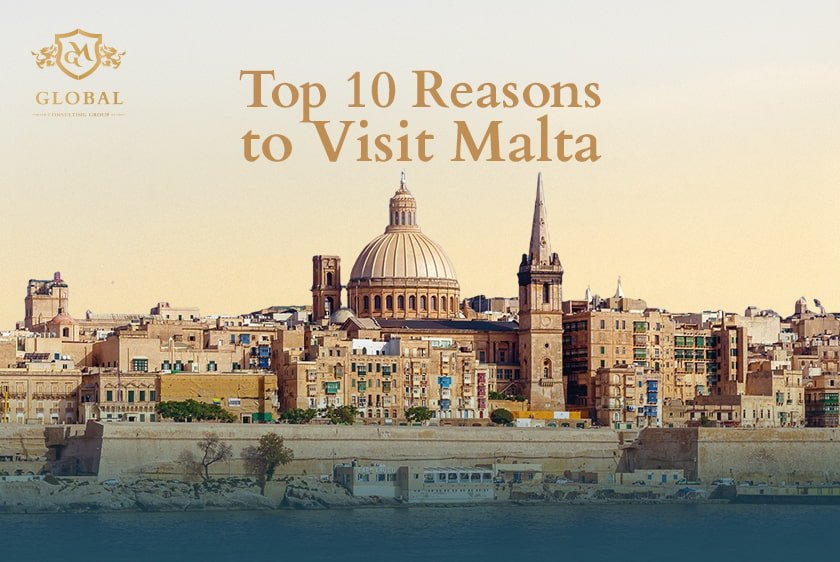
Malta may be one of Europe’s smallest countries, but few Mediterranean destinations combine history, coastal beauty, English-language accessibility, culture, education, business opportunities, and international mobility in such a compact setting.
So, why do people love Malta? For travelers, it is the combination of clear Mediterranean waters, historic cities, ancient temples, traditional villages, year-round cultural life, and easy distances between attractions. For families, Malta provides an English-speaking environment, established schools, and access to European education. For entrepreneurs and investors, it offers EU market access, a regulated corporate environment, real estate opportunities, and residence options such as the Malta Permanent Residence Programme.
Malta’s identity is equally distinctive. Its history stretches back more than 7,000 years, and the islands are home to three UNESCO World Heritage properties: Valletta, the Ħal Saflieni Hypogeum, and the Megalithic Temples. Visit Malta also highlights seven prehistoric temple complexes among the country’s World Heritage attractions.
This Malta travel guide explores the best places to visit in Malta, cultural experiences, beaches, food, hotels, education, investment opportunities, and the practical reasons visitors, families, and international investors continue to build lasting connections with the country.
Overview of Malta’s Uniqueness Compared to Other Mediterranean Destinations
Malta stands apart from larger Mediterranean destinations because of the concentration of experiences within a relatively small geographic area.
A visitor can move from prehistoric temples to a fortified Renaissance and Baroque capital, then continue to a fishing village, a beach, or a contemporary waterfront district without spending most of the day travelling.
Its cultural identity reflects centuries of interaction between Mediterranean and European civilizations. Phoenicians, Romans, Arabs, the Knights of St. John, the French, and the British all influenced Malta’s architecture, language, institutions, and traditions.
Malta also combines Maltese and English as official languages, which helps international visitors, students, entrepreneurs, and families navigate everyday life more easily than in destinations where language presents a significant barrier.
Unlike destinations built mainly around seasonal tourism, Malta functions as a year-round place to live, study, work, and invest. Financial services, digital industries, maritime activities, education, tourism, and professional services operate alongside the traditional Mediterranean lifestyle.
What Makes Malta Different?
Malta’s appeal comes from contrast.
It is historic without feeling frozen in the past. Valletta’s fortifications and palaces coexist with restaurants, offices, galleries, and contemporary cultural venues.
It is cosmopolitan without the scale of a major European metropolis. Sliema and St. Julian’s offer international restaurants, businesses, hotels, and nightlife, while villages only a short distance away retain a much more traditional rhythm.
Its prehistoric heritage is particularly remarkable. Malta’s temple sites include some of the oldest surviving free-standing monumental structures in the world, predating Stonehenge and the Egyptian pyramids.
The result is a destination that can appeal simultaneously to history enthusiasts, beach travelers, students, families, entrepreneurs, and investors.
Why Do People Love Malta?
The answer to why do people love Malta depends on who you ask.
A traveler may mention turquoise coves, warm weather, historic streets, or Malta’s lively festivals. A student may appreciate studying in English while living in the Mediterranean. An entrepreneur may value access to the EU market and an established professional-services sector. A family may prefer Malta’s compact geography and range of schools.
The country is also unusually diverse for its size. A weekend can include swimming, diving, exploring archaeological sites, dining in a fishing village, visiting historic fortifications, and attending a festival in Valletta.
VisitMalta highlights Malta’s combination of beaches, gastronomy, nightlife, historic sites, and more than 120 dive sites, illustrating how many different experiences fit into the islands.
10 Reasons Travelers Fall in Love with Malta
- Extraordinary history: More than 7,000 years of cultural heritage are concentrated across a small archipelago.
- UNESCO heritage: Valletta, the Hypogeum, and Malta’s Megalithic Temples offer exceptional historic depth.
- Mediterranean coastline: Beaches, rocky coves, sea caves, and natural swimming areas are easily accessible.
- Excellent diving: Malta has more than 120 recognised dive sites and is particularly known for wreck and cave diving.
- Compact travel distances: Major attractions can often be combined within a single day.
- English-language accessibility: Communication is straightforward for many international travelers.
- Distinctive cuisine: Maltese food blends Mediterranean traditions with influences accumulated over centuries.
- Festivals and nightlife: Village festas, concerts, cultural festivals, and contemporary nightlife create year-round variety.
- Malta and Gozo offer different rhythms: Visitors can combine a lively main island with quieter Gozitan villages and countryside.
- It works beyond tourism: Malta is also a destination for education, business, investment, and long-term residence.
Exploring the Towns and Villages of Malta
Many of the best places to visit in Malta are not isolated attractions but living towns and villages, each offering a different side of Maltese identity.
Valletta
Valletta is Malta’s capital and one of its three UNESCO World Heritage properties. Its streets combine monumental architecture, museums, churches, balconies, cafés, restaurants, and panoramic views over the Grand Harbour.
Highlights include St John’s Co-Cathedral, the Grandmaster’s Palace, Upper Barrakka Gardens, the National Museum of Archaeology, and the city’s historic fortifications.
Valletta works equally well for a cultural weekend, business stay, or sophisticated base for exploring the rest of Malta.
Mdina
Mdina, the former capital, offers a dramatically different atmosphere.
Surrounded by fortified walls, its narrow streets, palaces, churches, and elevated position make it one of Malta’s most atmospheric destinations, especially in the evening.
It is ideal for visitors interested in medieval architecture, photography, historic residences, and quieter cultural experiences.
Rabat
Adjacent to Mdina, Rabat feels more residential and provides access to important archaeological and religious sites.
Visitors can explore St Paul’s Catacombs, historic churches, traditional streets, cafés, and local bakeries while experiencing a more everyday side of Maltese life.
Marsaxlokk
Marsaxlokk is one of Malta’s best-known fishing villages.
Its harbour is associated with colourful traditional boats, seafood restaurants, and waterfront markets. It is a particularly attractive destination for a relaxed lunch combined with nearby coastal attractions.
Sliema
Sliema represents modern coastal Malta.
Its long promenade, apartment developments, shopping, restaurants, cafés, offices, and ferry connections make it popular among travelers, expatriates, and professionals.
Visitors who prefer convenience and an active waterfront atmosphere often choose Sliema as their base.
St. Julian’s & Paceville
St. Julian’s combines waterfront dining, hotels, luxury developments, business activity, and nightlife.
Spinola Bay provides a more relaxed restaurant setting, while Paceville is Malta’s best-known nightlife district.
The area tends to appeal to younger travelers, professionals, conference visitors, and guests looking for entertainment within walking distance.
Birgu (Vittoriosa)
Birgu is one of the historic Three Cities overlooking the Grand Harbour.
Its narrow streets, Fort St Angelo, marina, churches, and historic houses provide a strong connection to Malta’s maritime and military past.
Birgu offers a more intimate alternative to Valletta while remaining deeply connected to the island’s history.
Senglea
Senglea, also known as L-Isla, lies across the harbour from Valletta.
The Gardjola Gardens provide memorable views over the Grand Harbour, while the surrounding streets retain a strong residential character.
It is particularly rewarding for travelers who prefer quieter heritage areas.
Cospicua (Bormla)
Cospicua forms the third part of the Three Cities.
Once closely associated with Malta’s dockyards, it is experiencing gradual regeneration while retaining its historic character. Its waterfront and restored streets create an appealing transition between Malta’s industrial heritage and contemporary development.
Victoria
Victoria is the capital of Gozo and the island’s main commercial and administrative centre.
Its defining landmark is the Citadel, which rises above the surrounding countryside and provides panoramic views across Gozo.
The town also offers markets, restaurants, churches, museums, and traditional streets.
Xlendi
Xlendi is a small coastal village on Gozo framed by cliffs and a sheltered bay.
It is popular for swimming, restaurants, diving, and sunsets and works particularly well for visitors who prefer intimate seaside accommodation.
Marsalforn
Marsalforn is one of Gozo’s most popular seaside towns.
Its waterfront restaurants, swimming areas, accommodation, and relaxed summer atmosphere make it convenient for families and longer stays.
Qala
Qala offers broad sea views, village life, and proximity to Gozo’s eastern coastline.
It appeals more to travelers seeking traditional surroundings than to those looking for busy nightlife.
Gharb
Għarb is one of Gozo’s traditional western villages, characterised by rural surroundings, old houses, village architecture, and access to countryside walks.
It is especially attractive to travelers interested in slower tourism, restored farmhouses, and local character.
Mellieħa
Mellieħa is one of northern Malta’s most popular areas for families and beach-focused visitors.
Its elevated village centre overlooks Mellieħa Bay, while nearby attractions include Għadira Bay, Popeye Village, nature reserves, and convenient access toward the Gozo ferry.
Things to Do and See in Malta
The variety of things to do in Malta is one reason repeat visitors often discover something new on each trip.
Cultural and Historical Activities
Important cultural attractions include:
- Ħal Saflieni Hypogeum
- St John’s Co-Cathedral
- Fort St Angelo
- National Museum of Archaeology
- Grandmaster’s Palace
- Mdina
- Ġgantija
- Ħaġar Qim and Mnajdra
- Tarxien Temples
- Malta’s wartime shelters and fortifications
UNESCO World Heritage Sites & Megalithic Temples
Malta has three UNESCO World Heritage properties: Valletta, the Ħal Saflieni Hypogeum, and the Megalithic Temples of Malta. The Megalithic Temples designation comprises seven temple complexes across Malta and Gozo.
Among the most important are:
- Ġgantija
- Ħaġar Qim
- Mnajdra
- Tarxien
- Ta’ Ħaġrat
- Skorba
These sites are central to understanding Malta’s prehistoric importance and distinguish the islands from many other Mediterranean destinations.
Outdoor Activities
Outdoor experiences include:
- Swimming
- Snorkelling
- Sailing
- Coastal walking
- Kayaking
- Boat trips
- Cycling
- Rock climbing
- Diving
- Exploring sea caves
Popular outdoor locations include Dingli Cliffs, Għajn Tuffieħa, Blue Grotto, Dwejra, Comino, Mellieħa Bay, and Gozo’s rural coastline.
Scuba Diving, Wreck Diving & Marine Adventures
Diving is one of Malta’s strongest specialist tourism experiences.
VisitMalta identifies more than 120 dive sites around the Maltese Islands, supported by good underwater visibility and a combination of reefs, caves, underwater landscapes, and wrecks.
Well-known dives include wreck sites around Ċirkewwa, Gozo, and Comino as well as natural formations such as the Blue Hole at Dwejra.
Beginners can take introductory courses, while experienced divers can explore deeper wreck and technical-diving sites.
Festivals and Events
Malta’s events calendar extends far beyond the summer beach season.
Highlights include:
- Malta International Arts Festival
- Malta Jazz Festival
- Carnival
- Holy Week
- Village festas
- Isle of MTV
- Notte Bianca
- Christmas celebrations in Valletta and other towns
Village festas are particularly distinctive, bringing together religious traditions, street decorations, band clubs, food, fireworks, and community celebrations.
Filming Locations & Pop Culture Tourism
Malta has a long relationship with film and television production thanks to its historic architecture, fortifications, coastline, and specialised production facilities.
Visitors often seek locations associated with major international productions. VisitMalta specifically promotes the islands’ film heritage and references locations used as the original King’s Landing in Game of Thrones.
Film tourism can be combined with historic sightseeing because many locations are genuine heritage sites rather than constructed tourist attractions.
Where to Stay: The Best Hotels in Malta
Where you stay should reflect the experience you want rather than simply the hotel category.
The Phoenicia Malta – Valletta: Ideal for classic luxury, gardens, and access to the capital.
Iniala Harbour House – Valletta: A boutique luxury option overlooking the Grand Harbour.
Malta Marriott Resort & Spa – St. Julian’s: Suitable for travelers seeking resort facilities close to commercial and entertainment districts.
Cugo Gran Macina – Senglea: A distinctive choice within the historic Three Cities.
Kempinski Hotel San Lawrenz – Gozo: Well suited to travelers seeking a quieter resort and wellness experience.
Visitors wanting nightlife may prefer St. Julian’s, urban convenience often favours Sliema, cultural travelers may choose Valletta, and those prioritising tranquillity may find Gozo more suitable.
The Best Beaches in Malta
Malta’s coastline offers both sandy beaches and limestone swimming areas.
Popular choices include:
Golden Bay: A broad sandy beach popular with families and sunset visitors.
Għajn Tuffieħa: A scenic bay reached by steps and surrounded by more natural landscapes.
Mellieħa Bay: One of Malta’s largest sandy beaches and particularly convenient for families.
Ramla Bay: Gozo’s distinctive reddish-sand beach.
Blue Lagoon: Comino’s famous turquoise swimming area, best enjoyed outside the busiest periods.
St Peter’s Pool: A natural limestone swimming area near Marsaxlokk, more appropriate for confident swimmers than small children.
A Culinary Journey Through Malta: Exploring Maltese Cuisine
Maltese cuisine reflects the islands’ position at the crossroads of the Mediterranean.
Traditional foods include:
- Pastizzi: flaky pastries commonly filled with ricotta or peas
- Stuffat tal-Fenek: slow-cooked rabbit stew
- Ftira: traditional Maltese bread and filled flatbread preparations
- Lampuki: seasonal fish used in pies and other dishes
- Bigilla: a seasoned broad-bean dip
- Imqaret: date-filled pastries
- Fresh seafood: particularly prominent in coastal communities
Contemporary Malta also has a diverse restaurant scene ranging from local bakeries and family-run trattorias to Michelin-recognised dining.
Best Time to Visit Malta – Weather, Events, and Tips
The best time to visit Malta depends on whether your priority is swimming, sightseeing, festivals, or avoiding peak crowds.
Seasonal Weather Overview
Spring – March to May: Mild to warm conditions make this one of the best periods for cultural sightseeing, walking, and outdoor exploration.
Summer – June to August: Hot, dry, and busy. Best for beaches, nightlife, festivals, and water activities.
Autumn – September to November: Sea temperatures remain pleasant into early autumn while crowds gradually decline.
Winter – December to February: Cooler and wetter but generally mild by northern European standards. Suitable for museums, historical sightseeing, and quieter stays.
When to Avoid Crowds
July and August are the busiest months for beach tourism.
Travelers wanting warm weather with fewer visitors may find May, September, and early October particularly appealing.
Popular attractions such as the Blue Lagoon are best visited early in the day or outside peak summer.
Top Events and Cultural Festivals
Important annual events include:
- Carnival in February
- Holy Week and Easter celebrations
- Malta International Arts Festival
- Malta Jazz Festival
- Summer village festas
- Isle of MTV
- Notte Bianca in Valletta
Event dates can vary each year, so travelers should confirm official schedules before booking.
Travel Tips and Packing Advice
For summer, pack:
- Lightweight clothing
- Sunscreen
- Sunglasses
- Swimwear
- Comfortable footwear
- Reusable water bottle
Spring and autumn benefit from a light jacket for evenings, while winter visitors should bring layers and rain protection.
Malta uses Type G British-style electrical plugs, so travelers from continental Europe and many other regions need an adapter.
Comfortable shoes are particularly useful because historic centres often have steps, limestone paving, and uneven streets.
Education in Malta: A Gateway to International Learning
Malta’s educational environment is another reason families and students develop long-term connections with the country.
English is widely used throughout higher education. At the University of Malta, the official language of instruction is English, and international applicants must satisfy the university’s English-language requirements.
Malta offers:
- State schools
- Church schools
- Independent schools
- International schools
- Vocational education
- Higher education
- English-language schools
Top International Schools & University of Malta
International families can consider schools such as Verdala International School and QSI International School, alongside established independent Maltese schools.
The University of Malta is the country’s principal public university and offers programmes across disciplines including medicine, engineering, business, law, science, humanities, technology, and architecture. Its international-student services cover applications, accommodation, visas, tuition, banking, and student support.
English Language Learning Centers & Student Life
Malta has also built a substantial industry around English-language learning.
Students can combine language study with Mediterranean life, cultural activities, and outdoor experiences. The University of Malta operates and validates its own residential language school, while numerous licensed private language centres operate across the islands.
Student life is concentrated around Msida, Gżira, Sliema, St. Julian’s, and other well-connected areas.
Malta Investment Opportunities
For international visitors who become interested in establishing longer-term ties, Malta also provides opportunities across real estate, business, technology, financial services, and residence planning.
Investors should separate lifestyle appeal from financial analysis. A destination can be attractive to live in without every property or business automatically being a good investment.
Real Estate
Malta’s real estate market includes:
- Seafront apartments
- Historic townhouses
- Villas
- Penthouses
- Commercial property
- Hospitality assets
- Houses of character
- Property in Special Designated Areas
Sliema and St. Julian’s appeal to investors seeking premium urban demand, while Valletta and the Three Cities provide historic properties. Gozo can suit buyers prioritising lifestyle and space.
Foreign purchasers should evaluate title, planning, AIP rules where applicable, transaction taxes, rental restrictions, and expected net returns before buying.
Malta Permanent Residence Program (MPRP)
The Malta Permanent Residence Programme (MPRP) is Malta’s official permanent residence-by-investment framework for qualifying third-country nationals.
Current requirements include qualifying residential property through either:
- Purchase from €375,000, or
- Rental from €14,000 annually.
The qualifying property must generally be maintained for five years, after which beneficiaries must continue maintaining residential accommodation in Malta.
MPRP also involves government fees, a contribution, a charitable donation, financial-asset eligibility, health insurance, and rigorous due diligence.
It does not grant Maltese citizenship, does not provide visa-free travel to 190 countries, and should not be marketed as a dual-citizenship programme.
Its core mobility benefit is permanent residence in Malta together with qualifying short-stay travel within the Schengen Area under applicable rules.
Business & Startups
Malta can be attractive to entrepreneurs in sectors such as:
- Software
- Fintech
- iGaming
- Financial services
- Maritime services
- Aviation
- Professional services
- Pharmaceuticals
- Life sciences
- Digital businesses
Malta Enterprise maintains a range of incentives intended to promote investment and innovative enterprise, and current 2026 support programmes include startup and business-development measures.
Regulated industries require appropriate licensing and substantive compliance. Establishing a company alone does not provide automatic access to every regulated EU market.
Tax Incentives & Corporate Benefits for Investors
Malta operates a standard corporate income-tax rate of 35%. Under its full imputation system, shareholders may be entitled to refunds of part or all of the corporate tax paid after qualifying dividend distributions, depending on the nature of the income and applicable rules.
This can make Malta relevant to international corporate structures, but claims that every Maltese company simply pays a 5% tax rate are misleading.
Tax outcomes depend on:
- Company activity
- Residence and management
- Shareholder status
- Income type
- Substance
- Double-taxation treaties
- Anti-abuse rules
- International reporting obligations
Professional Maltese and cross-border tax advice should be obtained before selecting a corporate structure.
Your Mediterranean Life Awaits. Reach Out to GICG Today to Start Your Journey to Malta!
For some people, Malta remains an unforgettable holiday. For others, it develops into a place to study, invest, establish a business, purchase property, or create a long-term family base.
That versatility is central to why people love Malta.
GICG (Global for Citizenship and Residency) supports international investors and families exploring Malta through residency, property, investment, and relocation planning.
Whether your goal is to understand the Malta Permanent Residence Programme, evaluate investment opportunities, or establish a longer-term connection with the country, professional guidance can help separate travel inspiration from the legal and financial decisions involved in relocation.
FAQs
What Makes Malta So Special for Investors?
Malta combines EU and Eurozone membership, English-language business services, a developed financial sector, investment incentives, real estate opportunities, and a regulated permanent residence programme.
Its attraction is particularly strong for internationally oriented investors rather than businesses dependent solely on Malta’s relatively small domestic market.
Investment decisions should still be based on due diligence, expected returns, regulation, taxation, and exit strategy rather than Malta’s lifestyle appeal alone.
Why Do People Choose Malta When Thinking About Where to Invest or Relocate?
People may choose Malta because they can combine an EU business environment with an English-speaking Mediterranean base.
Families can access education and healthcare, entrepreneurs can operate within an internationally oriented services economy, and eligible investors can consider permanent residence through MPRP.
The right reason differs by applicant: some prioritise mobility, others property, education, business, or family security.
What’s So Interesting About Malta for Someone Looking to Invest?
Malta’s strongest opportunities often sit at the intersection of international demand and specialised industries.
Real estate, financial services, technology, iGaming, maritime services, aviation, pharmaceuticals, tourism, and professional services can all be relevant depending on an investor’s expertise and capital.
Malta Enterprise also maintains incentives aimed at investment, innovation, and startup development.
What Is Malta Best Known for Among Investors?
Among investors, Malta is particularly associated with:
- Permanent residence through the MPRP
- Real estate
- Financial and corporate services
- Fund structures
- iGaming
- Technology and fintech
- Maritime and aviation activity
- International business structures
It is also increasingly evaluated as a long-term family and lifestyle base rather than purely as an investment jurisdiction.
Start Your Malta Journey!
Malta can be a holiday destination, an educational base, an investment market, or a long-term home the right path depends on what you want to achieve.
Start your Malta journey with GICG today and receive personalised guidance on Malta residency, investment, property, and relocation opportunities suited to your family and long-term goals.