
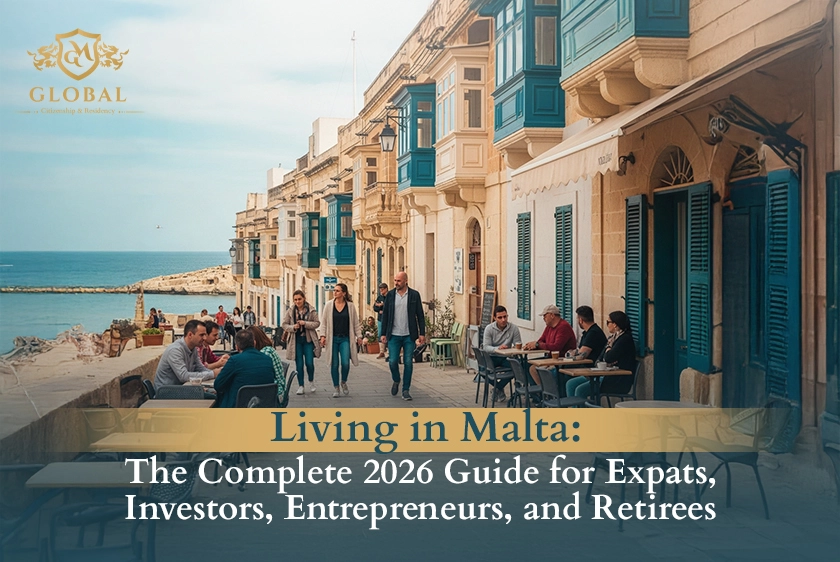
Living in Malta: The Complete 2026 Guide for Expats, Investors, Entrepreneurs, and Retirees

Malta is a European island country located in Southern Europe in the central Mediterranean Sea, positioned about 80 km south of Sicily (Italy), 284 km east of Tunisia, and around 333 km north of Libya. The country covers a total area of about 316 square kilometers, making it one of the smallest countries in Europe, yet highly developed and densely populated. Malta consists of three main islands Malta, Gozo, and Comino ,along with several smaller islets, and its capital city is Valletta. The country has a population of roughly 570,000–580,000 people as of 2026, living within a compact but vibrant island nation. Malta operates in the Central European Time Zone (CET, UTC+1) and uses the international country calling code +356.

Malta has a long and rich history that dates back more than 7,000 years, shaped by various civilizations including the Phoenicians, Romans, Arabs, Knights of St. John, and the British. Today, the country is globally known for several defining features, including its Mediterranean beaches, ancient temples that predate the pyramids of Egypt, historic fortified cities, thriving tourism industry, and strong financial services sector. Its strategic location between Europe, North Africa, and the Middle East has historically made Malta a major trading and cultural crossroads.

Over the past two decades, Malta has transformed into one of Europe’s most attractive destinations for expatriates, investors, and global entrepreneurs. Programs such as the Malta Permanent Residence Programme (MPRP), digital nomad visas, and investment-based residency options have contributed to a steady increase in international relocation. In 2024 alone, Malta issued more than 33,000 first-time residence permits to foreign nationals, including several thousand linked to investment and residency programs.

People move to Malta for many different reasons. Some are drawn by the country’s Mediterranean lifestyle and warm climate, while others relocate for business opportunities, favorable tax structures, access to the European Union market, and long-term residency options. Entrepreneurs often choose Malta to establish companies that operate across Europe, while investors benefit from strong sectors such as real estate, fintech, tourism, and financial services. Retirees and digital nomads are equally attracted by the island’s relaxed lifestyle, safety, and English-speaking environment.

Life in Malta has many advantages. Among the most notable are a high quality of life, a strategic location within the European Union, a favorable tax and investment environment, and a welcoming multicultural society. These factors have helped the country build a strong reputation as a relocation destination for professionals, families, and high-net-worth individuals alike.

In this guide, you will get a complete overview of life in Malta and everything you need to know before moving to the country. Whether you are an expat seeking a high quality of life for your family, an investor looking for promising opportunities, an entrepreneur planning to start or expand a business, a millionaire or high-net-worth individual aiming to protect your wealth, or a public figure seeking a secure “Plan B” residency, this guide will help you understand what living in Malta is really like in 2026.

Why People Move to Malta: Key Benefits for Expats

People move to Malta for a variety of reasons, but the most common ones include the country’s Mediterranean lifestyle, relatively affordable cost of living compared with many Western European countries, warm climate, and strong sense of safety and stability. With more than 300 days of sunshine per year, beautiful coastal landscapes, and a relaxed pace of life, Malta offers an attractive environment for individuals and families seeking a better work–life balance. The country is also appealing because English is an official language, healthcare and infrastructure are of high quality, and residents enjoy access to the European Union’s freedom of movement and market opportunities. Additionally, Malta’s tax-friendly environment and residency programs make it particularly attractive to investors, entrepreneurs, and retirees.

For many expatriates, the motivations for relocating to Malta are closely tied to conditions in their home countries. US citizens, for example, are often drawn by Malta’s European lifestyle, access to international healthcare systems, and opportunities to establish businesses within the EU market. British expats have increasingly moved to Malta following Brexit, as it allows them to maintain a strong connection to Europe while living in a familiar English-speaking environment. Meanwhile, Canadians and Australians are attracted by Malta’s strategic location, warm climate, and relatively easy integration due to cultural similarities and widespread English usage.

European nationals such as those from Spain and other EU countries are often motivated by professional opportunities in sectors like financial services, tourism, and technology, as well as Malta’s dynamic startup ecosystem. Many also appreciate Malta’s ability to offer a Mediterranean lifestyle combined with a modern, business-friendly economy. Overall, Malta’s combination of lifestyle benefits, economic opportunities, and international accessibility makes it one of the most appealing relocation destinations for expatriates in Europe.

Who Is Malta Best For?

Malta attracts a wide range of international residents thanks to its EU membership, high quality of life, favorable tax environment, and strategic location in the Mediterranean. The country offers opportunities for people with different lifestyles and goals from professionals seeking mobility to investors looking for financial advantages. Because of its combination of lifestyle benefits and economic opportunities, Malta is particularly well-suited for several key groups, including:

  • Expats Seeking Quality of Life and Global Mobility: Malta is an excellent destination for expatriates who want to enjoy a relaxed Mediterranean lifestyle while maintaining access to European opportunities. Residents benefit from English as an official language, good healthcare, safe communities, and visa-free travel across the Schengen Area, making it ideal for professionals and families seeking both comfort and mobility.

  • Retirees Looking for a Relaxed Lifestyle: Many retirees choose Malta for its warm climate, beautiful coastal scenery, and slower pace of life. The island offers a welcoming community, modern healthcare facilities, and numerous leisure activities, making it an appealing location for those who want to spend their retirement years in a safe and sunny European destination.
  • Investors, Entrepreneurs, and High-Net-Worth Individuals (HNWIs): Malta has become a strategic hub for investors and business owners thanks to its competitive tax framework, access to the EU market, and strong financial services sector. Investors can explore opportunities in sectors such as real estate, technology, finance, and tourism while benefiting from residency and investment programs.
  • “Plan B” Residency Seekers: Malta is also popular among individuals seeking a secure alternative residency or “Plan B”. Political figures, entrepreneurs, and wealthy individuals from around the world often view Malta as a stable and well-connected jurisdiction within the European Union, providing security, mobility, and long-term residency options for themselves and their families.

What Is Life Like in Malta?

Life in Malta is generally characterized by a balanced blend of Mediterranean lifestyle and modern European living. While the country has a professional business environment ,especially in sectors like finance, technology, and tourism the overall pace of life tends to be more relaxed than in many larger European cities. People in Malta often place strong emphasis on family, community relationships, and enjoying everyday life, which is reflected in social traditions, frequent gatherings, and a culture that values leisure alongside work.

The Maltese lifestyle is strongly influenced by the island’s climate and geography. With sunny weather most of the year and easy access to beaches, marinas, and historic towns, outdoor activities are a central part of daily life. Many residents spend their free time enjoying seaside walks, dining outdoors, or participating in local festivals and cultural events. Social interaction also plays an important role in Maltese culture, with cafés, restaurants, and waterfront promenades serving as common meeting places for both locals and expatriates.

At the same time, Malta maintains the advantages of a modern European country. It offers high-speed internet, international schools, reliable healthcare, and a growing business ecosystem, making it suitable for professionals, entrepreneurs, and remote workers. Overall, life in Malta is often described as a comfortable balance between productivity and quality of life, where people can pursue career opportunities while still enjoying a relaxed and community-oriented lifestyle.

Cost of Living in Malta in 2026

The cost of living in Malta in 2026 typically ranges between €1,200–€1,800 per month for a single person and around €2,800–€4,200 per month for a family of four, depending largely on lifestyle and location. Areas with strong tourism and business activity ,such as Sliema, St. Julian’s, and Valletta ,tend to have the highest living costs, especially for housing and dining. Meanwhile, towns in the central and southern parts of the island or on Gozo are significantly more affordable, where a single person may live comfortably on €900–€1,200 per month with moderate spending.

In general, the most expensive cities in Malta are Sliema, St. Julian’s, and Valletta, mainly due to their proximity to the sea, vibrant nightlife, international businesses, and strong demand from expatriates and tourists. These areas offer premium waterfront apartments, luxury amenities, and access to major business hubs. On the other hand, more affordable locations include Birkirkara, Mosta, Zabbar, and areas on the island of Gozo, where rental prices are lower and the lifestyle is quieter. As a general rule, the closer you live to popular tourist centers or waterfront districts, the higher the prices will be, especially for prime accommodation, restaurants, and entertainment.

Below is an approximate monthly budget breakdown for living in Malta:

Expense Category Single Person (Monthly) Family of Four (Monthly)
Rent (1–3 bedroom apartment) €700 – €1,200 €1,300 – €2,200
Utilities (electricity, water, internet) €120 – €200 €180 – €300
Groceries & Food €250 – €400 €600 – €900
Transportation €30 – €80 €80 – €150
Dining & Entertainment €120 – €250 €250 – €450
Education / Childcare (if applicable €300 – €700
Miscellaneous Expenses €100 – €200 €200 – €350
Estimated Total €1,200 – €1,800 €2,800 – €4,200

Compared to other European countries, Malta’s cost of living is generally moderate rather than cheap. It is typically more expensive than Portugal or parts of Spain, mainly due to the island’s limited housing supply and high demand from expatriates and tourism. However, Malta is still significantly cheaper than major cities in the United Kingdom or the United States, particularly compared to places like London, New York, or San Francisco. Globally, Malta is usually ranked as a mid-to-upper-tier country in cost-of-living indexes, offering a relatively high standard of living without the extremely high costs seen in many Western European capitals.

Housing and Real Estate in Malta

Housing and real estate in Malta have experienced strong growth over the past decade, driven by a combination of economic expansion, foreign investment, tourism, and an increasing expatriate population. Property prices in the country have risen steadily, with residential real estate values increasing significantly since the early 2010s and continuing to grow at a moderate pace in recent years. For example, Malta’s property market has recorded price growth of around 4–5% annually, reflecting strong demand from both local buyers and international investors. The real estate sector is now considered one of the most important parts of the Maltese economy, with demand supported by foreign workers, investors, and people relocating to the island.

There are several types of accommodation available in Malta. The most common options include modern apartments, penthouses, maisonettes (multi-floor homes with separate entrances), townhouses, villas, and traditional Maltese “houses of character.” Apartments dominate the rental market, especially for expatriates who often prefer fully furnished, move-in-ready units. Rental prices vary widely depending on the property type and location. On average, a studio apartment rents for about €800 per month, a one-bedroom apartment around €900, and a two-bedroom apartment around €1,200, although prices in prime seafront locations can exceed €1,500 per month. Compared with countries such as Portugal or Spain, Malta is often slightly more expensive in major coastal areas because the island has limited land supply and strong demand from tourism and international workers. These factors,along with Malta’s strong economy and favorable investment environment,help explain why housing prices remain relatively high.

Rental prices also vary significantly between cities. Sliema, St. Julian’s, Valletta, and Ta’ Xbiex are among the most expensive areas due to their proximity to business districts, seafront locations, nightlife, and international communities. In contrast, towns such as Mosta, Birkirkara, Marsaskala, Żejtun, and areas in Gozo are typically more affordable. The difference in prices is mainly influenced by factors such as distance from the sea, proximity to tourist centers, access to offices and public transport, and the availability of modern developments or luxury amenities.

The rental process in Malta is relatively straightforward and is governed by the Private Residential Leases Act (2020), which regulates landlord-tenant relationships and provides legal protections for both parties. Typically, tenants are required to pay one month’s rent as a security deposit, along with the first month’s rent at the time of signing the lease. Most rental agreements last at least 12 months, although shorter leases may exist in certain cases. In many properties, tenants pay for utilities such as electricity, water, and internet, while landlords are responsible for structural maintenance of the property. The lease agreement usually requires basic documents such as passport identification, proof of income or employment, and sometimes references, especially for long-term rentals.

To find accommodation in Malta, newcomers typically use real estate agencies, online property portals, relocation services, or local social media groups that advertise rental listings. For buyers, real estate agents and licensed property developers often assist with the purchasing process. Because the market is competitive, especially in popular expat areas, it is generally recommended to begin the housing search early and work with reputable agents to secure the most suitable property.

Taxes in Malta for Expats

Taxes in Malta are generally considered competitive compared with many Western countries, particularly for expatriates and international investors. While Malta’s top personal income tax rate can reach 35%, the overall tax burden is often lower due to special tax regimes, residency rules, and various incentives available to foreign residents. Compared with countries such as the United States or the United Kingdom, where combined federal, state, and local taxes can exceed 40–45% in some cases, Malta can be more attractive for expatriates who structure their income efficiently or qualify for special residency programs.

Malta operates a progressive tax system for individuals, meaning tax rates increase as income rises. The main taxes in Malta include personal income tax, corporate tax, value-added tax (VAT), capital gains tax, and social security contributions. Personal income tax rates typically range from 0% to 35%, depending on income level and marital status. For expatriates and non-citizens, taxation is usually based on residency status and the remittance basis of taxation. Under this system, foreign residents who are not domiciled in Malta are generally taxed only on income earned in Malta and foreign income that is brought (remitted) into the country, while foreign income kept outside Malta is usually not taxed.

Corporate taxation is another important part of Malta’s system. Companies are taxed at a standard corporate rate of 35%, but Malta’s well-known tax refund mechanism can significantly reduce the effective tax rate for shareholders,sometimes to around 5% for certain international business activities. In addition, Malta applies a standard VAT rate of 18%, with reduced rates of 7% and 5% for specific sectors such as tourism accommodation, certain goods, and cultural services.

One of Malta’s major advantages for expatriates and international businesses is its extensive network of double taxation treaties with more than 70 countries. These agreements are designed to prevent individuals and companies from paying tax twice on the same income in different jurisdictions. Countries included in Malta’s treaty network include the United States, United Kingdom, Canada, Australia, Germany, France, Spain, Italy, China, the United Arab Emirates, and many others, making Malta particularly attractive for globally mobile professionals and investors.

Taxes in Malta are typically paid through a self-assessment system administered by the Commissioner for Revenue. Employees usually have income tax deducted directly through the Final Settlement System (FSS), where employers withhold tax and social contributions from salaries. Self-employed individuals and entrepreneurs, however, must file annual tax returns and make provisional tax payments during the year based on expected income. These payments are usually made in installments and finalized when the annual tax return is submitted, ensuring compliance with Malta’s tax regulations.

Quality of Life in Malta

Malta offers a high quality of life by global standards, supported by strong economic performance, good healthcare, and a safe social environment. According to the United Nations Development Programme, Malta recorded a Human Development Index (HDI) of approximately 0.924 in 2023, placing it among the highest-ranked countries globally and firmly within the top tier of developed nations, reflecting strong performance in education, life expectancy, and income levels. The country also performs well in global happiness and well-being indices,for example, Malta ranked around 48th in the 2024 World Happiness Report,supported by its stable political environment, strong family-oriented culture, and the advantages of a Mediterranean lifestyle.

One of the most attractive aspects of living in Malta is its natural environment and access to the sea. Although the island is relatively small and densely populated, residents enjoy numerous coastal promenades, public gardens, and scenic viewpoints. Popular green areas such as Upper Barrakka Gardens in Valletta, San Anton Gardens in Attard, and several coastal parks and walking trails provide spaces for relaxation and outdoor activities. The Mediterranean climate,with more than 300 sunny days per year,encourages an active outdoor lifestyle that includes swimming, boating, hiking, and social gatherings.

Malta also offers a balanced work–life culture, particularly compared to many large metropolitan cities. While the country has a productive business environment in sectors like finance, technology, and tourism, the general pace of life is relatively relaxed. Social life plays a central role, with residents frequently meeting in cafés, restaurants, and seaside promenades. A large expatriate community from Europe, North America, and other regions has developed over the years, making it easier for newcomers to integrate and build social networks.

At the same time, Malta faces some challenges associated with its high population density, which is among the highest in Europe. With more than 1,800 people per square kilometer, traffic congestion during rush hours, especially in areas such as Sliema, St. Julian’s, and Birkirkara,can be noticeable. Despite this, most neighborhoods remain safe and well-maintained, with a mix of historic homes, modern apartments, and waterfront developments. Economic inequality exists, as in most developed countries, but Malta generally maintains strong social welfare systems and relatively low levels of extreme poverty, contributing to a stable and cohesive society.

Overall, life in Malta is often characterized by a comfortable balance between modern European living and a relaxed Mediterranean lifestyle. With its sunny climate, strong social culture, and safe communities, the country continues to attract expatriates seeking both professional opportunities and a high standard of living.

Safety and Crime Rates in Malta

Malta is widely regarded as one of the safest countries in Europe and the world, with relatively low crime rates and strong public security institutions. According to recent data, Malta recorded about 16,662 reported crimes in 2024 for a population of roughly 563,000, and the homicide rate was approximately 0.7 per 100,000 residents, which is significantly lower than in many Western countries. In international rankings, Malta performs strongly in safety indicators: it ranked 12th safest country globally in the World Justice Project’s order and security index and is often placed among the top 20–25 most peaceful countries in the Global Peace Index. Overall, crime levels are generally lower than in many European countries and far lower than in the United States, where violent crime rates are substantially higher.

Most crimes in Malta are non-violent and relatively minor, such as pickpocketing, small theft, fraud, or occasional property crimes, especially in areas with heavy tourist traffic. Violent crimes such as armed robbery or assault occur far less frequently compared with many large cities in Europe or North America. Because Malta is a small island with strong social ties, serious criminal activity is relatively uncommon and often receives significant attention when it does occur.

Certain areas with high nightlife or tourism activity, such as parts of St. Julian’s (Paceville), Sliema, and some busy urban districts, may experience slightly higher crime rates, mainly related to nightlife incidents, petty theft, or disputes among visitors. However, these cases are usually limited in scale, and even these districts remain comparatively safe by international standards.

Malta also maintains a visible and active police presence. The Malta Police Force operates nationwide with patrol units, community policing initiatives, and maritime security teams. Emergency response services are generally accessible and efficient due to the island’s small geographic size, allowing authorities to respond quickly to incidents. As a result, residents and expatriates often describe Malta as a place where people feel comfortable walking at night and where overall public safety remains consistently high compared with many countries around the world.

Education System in Malta

Malta has a well-developed education system that follows European standards and performs relatively well in international education rankings. The country consistently scores close to the OECD average in the Programme for International Student Assessment (PISA) for subjects such as reading, mathematics, and science. Malta is also home to reputable higher education institutions, most notably the University of Malta, which is one of the oldest universities in Europe, founded in 1592, and regularly appears in global university rankings. In addition, institutions such as the Malta College of Arts, Science and Technology (MCAST) and several international private universities offer specialized programs in technology, business, and vocational education.

Education in Malta is compulsory for children between the ages of 5 and 16, and the country provides free public education through government-funded schools. These public schools are generally considered good in quality and follow a national curriculum taught primarily in English and Maltese. In addition to government schools, Malta also has church schools, which are partially funded by the state and free of tuition, although admission can be competitive. Many expatriate families also choose private or international schools, which offer British, American, or International Baccalaureate (IB) curricula.

Private and international schools in Malta can be relatively expensive compared to public options. Tuition fees usually range from €4,000 to €12,000 per year, depending on the school, grade level, and curriculum offered. Some well-known international schools include Verdala International School, QSI International School of Malta, and St. Edward’s College, which are popular among expatriate families because they provide internationally recognized diplomas and multilingual learning environments.

Higher education in Malta is largely subsidized for Maltese and EU citizens, meaning that undergraduate programs at public institutions such as the University of Malta are often tuition-free, with students typically paying only administrative fees. Non-EU students usually pay tuition fees, though these are generally lower than those found in countries like the United States or the United Kingdom. Unlike the U.S. system, where student loans are common and tuition can be extremely high, Malta’s higher education system is more affordable and accessible. Expat children who are EU citizens or long-term residents may qualify for public schooling, while non-EU expatriates often enroll their children in private or international schools, depending on their residency status and educational preferences.

Healthcare System in Malta

Malta has a high-quality healthcare system that combines public and private services. The country operates a tax-funded national health system that provides nearly universal coverage, with healthcare services free at the point of delivery for residents, complemented by a growing private sector. The system has been internationally recognized for its performance. The World Health Organization ranked Malta 5th globally for overall healthcare quality, placing it ahead of countries such as the United Kingdom and the United States. In addition, Malta records strong health outcomes, including a life expectancy of around 82–83 years, above the EU average, reflecting the effectiveness of its healthcare services. These indicators support the view that Malta maintains one of the strongest healthcare systems among small European countries, particularly in terms of accessibility and overall population health. The public healthcare system is largely free at the point of use for Maltese citizens and EU residents who are covered by social security, while non-EU residents typically access healthcare through private insurance or out-of-pocket payments. Public healthcare services cover a wide range of treatments, including doctor consultations, hospital care, emergency services, maternity care, and many prescription medicines. Malta’s healthcare system is consistently ranked highly in international comparisons and is often placed among the top 20–25 healthcare systems globally in terms of efficiency and quality.

In terms of quality, Malta’s healthcare services are generally comparable to those of many Western European countries and competitive with the United States in terms of medical outcomes and accessibility, although the systems are structured differently. While the U.S. healthcare system is primarily private and often expensive, Malta’s public system ensures that residents can receive essential medical care without high direct costs. Hospitals such as Mater Dei Hospital in Msida, the country’s main public hospital, are equipped with modern facilities and highly trained medical professionals, many of whom have studied or trained abroad.

For those who prefer private healthcare, Malta also offers a strong private medical sector, which typically provides faster access to specialists and shorter waiting times. Private medical consultations usually cost between €25 and €60 per visit, while specialist appointments may range from €50 to €120, making private care relatively affordable compared with countries like the United States. Because of these moderate prices, private healthcare in Malta is not limited to wealthy individuals and is commonly used by expatriates and locals alike.

Healthcare services are generally accessible across the entire island, although most specialized medical facilities and major hospitals are located in central areas such as Msida, Birkirkara, and Sliema. Waiting times for public healthcare appointments can vary depending on the specialty, but general practitioner visits are often available quickly, and private clinics usually provide appointments within a few days. Pharmacies are widely available across Malta and Gozo, ensuring easy access to medications and basic healthcare advice.

Health insurance is recommended for expatriates, particularly for non-EU residents. Private health insurance plans in Malta typically cost between €300 and €1,000 per year, depending on age, coverage level, and provider. These plans usually cover private hospital care, specialist consultations, and certain medical procedures. Non-citizens can access medical care either through private insurance, employer-sponsored insurance plans, or by paying directly for services. Overall, Malta’s healthcare system is considered efficient, affordable, and accessible, with relatively limited bureaucracy compared with many larger countries.

Infrastructure and Public Services in Malta

Malta has a modern infrastructure system for a small island nation, supporting its growing economy, tourism industry, and expanding expatriate population. Electricity is widely available across the country and generally reliable, with supply managed by the national energy provider. Malta historically relied heavily on imported fossil fuels for electricity generation, but in recent years it has diversified its energy sources through interconnectors with the European grid and the expansion of renewable energy, particularly solar power. Water supply in Malta is more complex because the island has very limited natural freshwater resources. As a result, much of the country’s drinking water comes from desalination plants and groundwater sources, meaning tap water is safe but often slightly salty in taste, leading many residents to use bottled or filtered water for drinking.

Waste management and sanitation services are well established and managed by local councils and national authorities. The country operates recycling programs, waste separation systems, and regular municipal collection services, helping maintain cleanliness across most residential areas. Internet infrastructure is also highly developed, with high-speed fiber and 5G mobile networks available in most urban areas. Average broadband speeds are among the fastest in Southern Europe, which supports Malta’s digital economy and remote work culture. In addition, the government has made significant progress in digital transformation, offering a wide range of e-government services that allow residents to access administrative services, file taxes, apply for permits, and manage official documentation online.

Urban infrastructure in Malta is generally strong, particularly in central and northern regions where most economic activity takes place. Cities such as Sliema, St. Julian’s, Birkirkara, and Valletta offer modern residential developments, office spaces, shopping centers, healthcare facilities, and other essential amenities. Malta also places importance on historical preservation, with many neighborhoods featuring protected heritage buildings, ancient fortifications, and UNESCO-listed sites such as Valletta. Public spaces such as San Anton Gardens, Upper Barrakka Gardens, and coastal promenades provide residents with access to green areas, although the overall number of large parks is limited due to the country’s small land area.

The road network connects most parts of Malta efficiently, and the island’s compact size means that most destinations can be reached within 30–40 minutes by car. Major roads linking central and northern urban areas are generally in good condition, although traffic congestion during rush hours is common, especially in busy commercial districts. Public transportation mainly relies on an island-wide bus network, which covers most towns and villages. However, infrastructure in some rural or less-developed areas can be more limited, and certain locations are not well connected by public transport. In these cases, residents may need to rent a car or arrange alternative transportation to reach more remote parts of the island.

Transportation and Getting Around in Malta

Malta offers several transportation options for residents and visitors, although the system is primarily road-based due to the country’s small size and lack of railways or metro systems. Most people rely on private cars, buses, taxis, and ride-hailing services to move around the island. Because Malta is relatively compact,only about 27 km long and 14 km wide,many destinations can be reached within 30 to 40 minutes by car under normal traffic conditions.

The public bus system, operated by Malta Public Transport, is the main form of public transportation. Buses connect nearly all towns and villages across Malta and Gozo, making them widely available. A standard adult ticket typically costs around €1.50 in winter and €2.00 in summer, while residents can purchase travel cards that offer discounted or unlimited travel. While the bus network is extensive and affordable, reliability can sometimes be affected by traffic congestion and peak-hour delays, particularly in busy areas like Sliema, Valletta, and St. Julian’s.

For faster or more flexible travel, many residents use taxis and ride-hailing services such as Bolt, Uber, and eCabs, which are widely available in urban areas. These services are generally reliable and relatively affordable compared to major European cities. A typical short ride within central areas may cost €8–€15, depending on distance and time of day.

Another popular option is private car ownership, which offers the most convenience for daily commuting and reaching rural areas. However, traffic congestion during rush hours can be significant, and parking in busy districts can sometimes be challenging. For travel between the main islands, regular ferry services operate between Malta and Gozo, as well as fast ferry connections between Valletta and other coastal towns, providing an efficient alternative to road transport.

Overall, transportation in Malta is accessible and relatively affordable, though traffic and road congestion can affect travel times during peak hours.

Culture and Traditions in Malta

Malta’s culture is a unique blend of Mediterranean traditions and European influences, shaped by thousands of years of history and the many civilizations that have ruled the island. Because of its strategic location between Europe, North Africa, and the Middle East, Malta developed a culture that combines southern European warmth, British administrative influence, and strong local traditions. Today, the Maltese way of life is often described as community-oriented, family-focused, and socially vibrant, with a strong emphasis on tradition while still embracing modern international lifestyles.

Maltese society places great importance on family, hospitality, and close social relationships. Extended families often maintain strong bonds, and gatherings with relatives or friends are a common part of daily life. People in Malta are generally considered friendly and welcoming toward foreigners, which is one of the reasons the country has developed a large expatriate community. Social etiquette tends to be polite but relaxed; greetings often include handshakes, and in social settings friends may greet each other with a kiss on both cheeks. Conversations are usually warm and informal, reflecting the island’s Mediterranean character.

Religion has historically played a central role in Maltese culture. Around 90% of the population identifies as Roman Catholic, making it the dominant religion in the country. Churches and religious celebrations are visible throughout Malta’s towns and villages, and many local festivals,known as “festas”,are dedicated to patron saints. While religion remains an important cultural element, Malta today is generally tolerant and accepting of cultural diversity, particularly because of its growing international population. In terms of language, Maltese and English are the official languages, with English widely used in business and education. Maltese is spoken by the majority of the population, and many residents also speak Italian, reflecting historical ties with neighboring Italy.

Food is another important part of Maltese culture and social life. Traditional Maltese cuisine is strongly influenced by Mediterranean cooking, combining Italian, Sicilian, and North African elements. Popular local dishes include rabbit stew (fenek), pastizzi (savory pastries filled with ricotta or peas), seafood dishes, and hearty stews. Meals are often social occasions, with lunch typically being a lighter meal and dinner serving as the main gathering time for families and friends. Coffee culture is also an important part of daily life, with locals and expatriates alike enjoying time in cafés and restaurants, especially in waterfront areas.

Malta’s rich cultural identity is also reflected in its historic architecture and heritage sites. The island is home to some of the oldest free-standing structures in the world, including prehistoric temples such as Ħaġar Qim and Mnajdra, which date back more than 5,000 years. Historic cities like Valletta, Mdina, and the Three Cities feature impressive fortifications, baroque palaces, cathedrals, and narrow stone streets that showcase centuries of architectural evolution. The capital city of Valletta itself is a UNESCO World Heritage Site.

Throughout the year, Malta celebrates numerous public holidays, religious festas, and cultural festivals that bring communities together. Fireworks displays, music, street decorations, and traditional processions are common during these celebrations. These traditions, along with Malta’s historic landmarks and vibrant social life, create a cultural environment that is both deeply rooted in history and welcoming to international influences.

Lifestyle in Malta

Lifestyle in Malta reflects the island’s Mediterranean culture,social, relaxed, and strongly centered around community and enjoyment of everyday life. Maltese people tend to appreciate the arts and cultural expression, with music playing an important role in local traditions. Live music is common during village festas (religious festivals), cultural events, and summer concerts, where brass bands, classical music, and modern pop performances often accompany fireworks and street celebrations. Malta also hosts several major cultural events each year such as the Malta International Arts Festival, Valletta Baroque Festival, and Isle of MTV, which attract international performers and large audiences. Popular national holidays and celebrations,including religious festas dedicated to patron saints,bring communities together through parades, music, food stalls, and fireworks, reflecting the island’s strong sense of tradition and celebration.

The Maltese lifestyle is generally outgoing and sociable, with locals valuing time spent with family and friends. Evenings often revolve around dining out, meeting at cafés, or walking along seaside promenades. Malta’s warm climate encourages outdoor living, and many social gatherings take place on terraces, waterfront restaurants, or public squares. The overall attitude of Maltese people tends to be friendly, laid-back, and welcoming toward foreigners, which helps expatriates integrate easily into the local community.

Sports and outdoor hobbies are also an important part of life in Malta. Football (soccer) is the most popular sport, both for watching and playing, followed by water sports such as swimming, sailing, diving, and fishing due to the island’s coastal location. Many residents spend weekends at the beach, exploring coastal areas, or enjoying boat trips around the islands of Malta, Gozo, and Comino. Cycling, hiking, and fitness activities have also become increasingly popular as health and wellness trends grow.

During their free time, locals and expatriates alike enjoy a variety of leisure activities,from attending cultural festivals and concerts to dining at seaside restaurants or participating in outdoor recreation. Overall, the lifestyle in Malta combines a relaxed Mediterranean rhythm with a vibrant cultural scene and strong community connections, making it appealing to both locals and international residents.

Social and Cultural Integration for Expats

Integrating into Maltese society is generally relatively easy for expatriates, particularly compared with many other European countries. One of the main reasons is that English is an official language in Malta and widely spoken by nearly the entire population, which removes one of the biggest barriers expats often face when relocating abroad. Maltese people are typically friendly, open, and accustomed to foreigners due to the island’s long history as an international trading hub and tourism destination. As a result, newcomers often find it easy to participate in local activities, festivals, and everyday social life while gradually learning about Maltese traditions and customs.

However, there can still be some cultural differences that expatriates,especially those from countries like the United States,may notice. For example, Malta’s pace of life tends to be slower and more relationship-oriented, while American culture is often more fast-paced and individualistic. Administrative procedures and bureaucracy may also feel slower than what some expats are used to in the U.S. Additionally, Malta’s compact geography and population density can take some adjustment for newcomers who are accustomed to larger cities and more space.

Malta has a large and active expatriate community, which helps newcomers build social networks quickly. Expats make up a significant portion of the population, particularly in urban areas such as Sliema, St. Julian’s, Gżira, and Valletta. The most common expatriate nationalities include people from the United Kingdom, Italy, France, Germany, Scandinavia, the United States, Canada, and Australia. There are also growing communities from other European countries working in sectors such as finance, gaming, tourism, and technology.

Social inclusion is generally strong in Malta, with many expat clubs, networking groups, sports communities, and social events organized throughout the year. International schools, coworking spaces, and professional networks also help expatriates meet others with similar backgrounds and interests. Interactions between locals and foreigners are typically positive, as Maltese society has become increasingly multicultural over the past two decades.

Another important element of life that helps expats integrate is Malta’s nature and outdoor lifestyle. The island offers beautiful beaches, coastal cliffs, hiking trails, and scenic countryside areas, particularly on the island of Gozo. Residents often spend their free time swimming, sailing, diving, or relaxing along the coast, which naturally creates social opportunities for both locals and expatriates. These shared outdoor activities make it easier for newcomers to connect with the community and feel at home in Malta.

Nature, Beaches, and Outdoor Life in Malta

Despite its small size, Malta offers a surprisingly rich natural environment centered around the Mediterranean Sea, dramatic coastal landscapes, and scenic countryside. The islands are surrounded by crystal-clear waters, rocky cliffs, sandy beaches, and hidden coves, making the sea one of the most defining elements of Malta’s natural beauty. Popular beaches such as Golden Bay, Mellieħa Bay, and the Blue Lagoon in Comino attract both locals and visitors who enjoy swimming, snorkeling, and boating throughout the long summer season.

Unlike many European countries, Malta does not have high mountains or large forests. Instead, the landscape is characterized by gentle hills, limestone cliffs, terraced farmland, and rugged coastal formations that provide panoramic views of the sea. Areas such as Dingli Cliffs, the highest point in Malta, offer spectacular sunset views and hiking routes along the island’s western coastline. The nearby island of Gozo is known for its greener countryside, quieter villages, and scenic valleys that are popular for walking and cycling.

Outdoor life plays an important role in Maltese culture because of the island’s warm Mediterranean climate and more than 300 sunny days per year. Residents frequently spend their free time enjoying activities such as swimming, sailing, diving, hiking, cycling, and seaside dining. Coastal promenades, public gardens, and waterfront cafés also provide spaces where people can relax, exercise, and socialize.

Overall, Malta’s natural environment may not be defined by vast wilderness, but it offers a beautiful coastal lifestyle where the sea, sunshine, and outdoor activities are central to everyday life.

Climate and Weather in Malta

Malta has a Mediterranean climate, characterized by hot, dry summers and mild, relatively wet winters. The islands enjoy more than 300 days of sunshine per year, making Malta one of the sunniest countries in Europe. Summer temperatures typically range between 28°C and 34°C (82°F–93°F) from June to September, while winter temperatures usually remain mild, averaging 10°C to 18°C (50°F–64°F) between December and February. Because Malta is surrounded by the Mediterranean Sea, sea breezes often help moderate extreme heat during the summer months.

Rainfall in Malta is relatively limited and mostly occurs during the late autumn and winter seasons, particularly from November to February. Snow is virtually nonexistent, and freezing temperatures are extremely rare. Spring and autumn are generally considered the most comfortable seasons, offering pleasant temperatures, clear skies, and ideal conditions for outdoor activities such as hiking, sightseeing, and boating.

The island’s climate plays a major role in shaping the Maltese lifestyle. With long sunny days and warm sea temperatures, residents and visitors spend much of their time outdoors,enjoying beaches, waterfront promenades, and open-air cafés. Even during winter, the weather is usually mild enough to allow outdoor activities, which contributes significantly to Malta’s appeal for expatriates and retirees seeking a warm European climate.

Overall, Malta’s climate is one of its greatest attractions. The combination of sunshine, warm summers, and mild winters creates an environment that supports an active outdoor lifestyle and makes the island a popular destination for people looking to escape colder climates in northern Europe and North America.

Malta’s Economy and Key Industries

Malta has a small but highly developed and diversified economy, making it one of the more prosperous countries in Southern Europe. The country uses the Euro (€) as its official currency, reflecting its membership in the Eurozone and the European Union. In recent years, Malta has maintained strong economic growth compared with many EU countries. According to Malta’s National Statistics Office, the country’s nominal GDP reached approximately €22.5 billion in 2024, while GDP per capita stood at around €39,350, broadly in line with or slightly above the EU average. These figures place Malta firmly among the high-income economies in the Mediterranean region, with income levels significantly higher than those of most North African and several regional economies.

Malta’s economy is largely service-oriented, with several key industries driving growth. The most important sectors include financial services, tourism, Gaming, maritime services, aviation, information technology, and professional services. Tourism remains a major contributor to the economy, attracting millions of visitors each year due to Malta’s beaches, historic sites, and Mediterranean climate. At the same time, the country has successfully developed a reputation as a European hub for fintech, blockchain innovation, and online gaming companies, which employ a large international workforce.

Employment opportunities in Malta are generally concentrated in service sectors, particularly in finance, hospitality, technology, customer support, and international business services. The unemployment rate in Malta is around 3–4%, which is relatively low compared with many European countries and reflects the island’s steady economic activity. Salaries vary depending on profession and experience, but the average gross monthly salary typically ranges between €1,500 and €2,500, with higher salaries available in specialized sectors such as finance, IT, and management.

Living conditions in Malta are generally comfortable, supported by stable employment, modern housing developments, and access to essential services such as healthcare and education. While the cost of living,especially housing,has increased in recent years due to strong demand from expatriates and investors, Malta still offers a balanced economic environment where income levels and lifestyle opportunities allow many residents to maintain a good quality of life.

Banking and Financial System in Malta

Malta has a modern and well-regulated banking and financial system, supported by its membership in the European Union and the Eurozone. The official currency is the Euro (€), which has been used in Malta since 2008. Cash is still accepted everywhere, but Malta has become increasingly cashless, especially in urban areas. Credit and debit cards are widely used in shops, restaurants, public transportation, and online payments, and contactless payments through smartphones or digital wallets are also common.

The country’s financial sector is highly digitalized, with most banks offering online banking, mobile apps, and digital financial services. International banks and fintech companies operate alongside local institutions such as Bank of Valletta (BOV), HSBC Malta, and APS Bank. As a result, everyday banking,such as bill payments, transfers, and account management,can usually be handled entirely online without visiting a branch.

Opening a bank account in Malta as an expatriate is possible but may involve strict compliance and due diligence procedures because of European anti-money laundering regulations. Typically, applicants need to provide a valid passport or ID, proof of address, proof of income or employment, and sometimes a Maltese residency permit. Some banks may also request information about the source of funds or the purpose of the account. While the process can take a few weeks, once the account is opened, managing finances is straightforward.

International money transfers are generally easy and efficient, particularly within the European Union. Transfers between Eurozone countries are often processed through the SEPA system, which allows low-cost or even free euro transfers across Europe. For transfers outside Europe, international bank transfers and fintech platforms such as Wise, Revolut, or PayPal are widely used by expatriates and businesses operating in Malta.

Government and Political System in Malta

Malta is a parliamentary republic and a democratic state, where political power is exercised through elected representatives. The country’s main institutions include the President of Malta, who serves as the ceremonial head of state, and the Prime Minister, who leads the government and executive branch. Legislative power is held by a unicameral Parliament (House of Representatives), whose members are elected through general elections typically held every five years. Malta’s political system is dominated by two major parties,the Labour Party and the Nationalist Party,which have alternated in government for decades.

Malta has generally maintained political stability and a strong democratic framework. Public protests and political demonstrations occur occasionally, as they do in most democratic countries, but they are usually peaceful and part of normal democratic participation. The country enjoys high levels of civil liberties, freedom of speech, and protections for human rights, supported by both its national constitution and its obligations as a member of the European Union. Administratively, Malta’s bureaucracy exists but is relatively manageable compared with many larger countries, and many government services have been digitalized through e-government platforms.

Internationally, Malta is well integrated into the global political system. The country is a member of the European Union (EU), United Nations (UN), Council of Europe, Commonwealth of Nations, and Schengen Area, although it maintains a policy of military neutrality and therefore is not a member of NATO. Malta maintains friendly diplomatic relations with neighboring Mediterranean countries and major global powers, benefiting from its strategic location between Europe, North Africa, and the Middle East.

Because of its EU membership and stable political environment, Malta is particularly attractive for individuals seeking a “Plan B” residency or global mobility strategy. Residency programs such as the Malta Permanent Residence Programme (MPRP) and other investment-based pathways allow foreign nationals to live in Malta and gain access to the Schengen Area for visa-free travel across much of Europe. For investors, entrepreneurs, and high-net-worth individuals, this combination of political stability, EU access, and strong legal protections makes Malta an appealing jurisdiction for securing long-term residency and international mobility.

Legal System and Regulations in Malta

Malta has a mixed legal system that combines elements of civil law and common law, reflecting the country’s historical influences from both continental Europe and British rule. Much of Malta’s civil law framework is based on Roman law and the Napoleonic Code, while areas such as commercial law, administrative law, and procedural rules have been influenced by British common law traditions. The legal system is overseen by a structured court hierarchy that includes the Constitutional Court, Court of Appeal, Civil and Criminal Courts, and Magistrates’ Courts. Key institutions involved in law enforcement and regulation include the Malta Police Force, the Attorney General’s Office, and various regulatory authorities such as the Malta Financial Services Authority (MFSA).

Malta’s legal framework operates within the broader context of European Union law, meaning that EU regulations and directives are integrated into national legislation. The country generally maintains a strong rule-of-law environment and transparent legal procedures. Regulatory oversight exists across many sectors, including financial services, gaming, aviation, and maritime industries, which are important parts of Malta’s economy. Businesses and individuals are expected to comply with both Maltese law and relevant EU regulations.

Some legal differences may surprise expatriates from countries like the United States. For example, Malta has stricter regulations in areas such as financial transparency, data protection (through the EU’s GDPR rules), and certain licensing requirements for business activities. Activities that may be loosely regulated in some parts of the U.S.,such as operating certain financial or online gaming services without proper licensing,are tightly regulated in Malta and require approval from national authorities. Additionally, Malta has strong consumer protection and workplace regulations aligned with EU standards, which may be more protective of employees and consumers than in some U.S. jurisdictions. Overall, Malta’s legal environment is considered stable, predictable, and investor-friendly, particularly for individuals and companies operating within regulated sectors.

Best Cities and Neighborhoods for Expats in Malta

Malta offers a variety of cities and neighborhoods that appeal to expatriates depending on lifestyle preferences, budget, and professional needs. Most expats prefer areas that provide easy access to business districts, international schools, entertainment, and the coastline, while still offering a comfortable residential environment. The northeastern part of the island is especially popular due to its vibrant social life, modern housing, and strong international community. 

Key areas to live in Malta include:

  • Sliema: One of the most popular areas for expats thanks to its seafront apartments, shopping centers, cafés, and strong international community. It is ideal for professionals and digital nomads who want a lively urban lifestyle.
  • St. Julian’s: A dynamic area known for business hubs, nightlife, and tech companies, particularly in the iGaming and fintech sectors. It is a good choice for young professionals and entrepreneurs.
  • Gżira: Located between Sliema and Valletta, Gżira offers modern apartments and convenient access to business districts, making it a practical option for professionals who want central connectivity.
  • Valletta: Malta’s historic capital is perfect for those who appreciate culture, architecture, and a unique city atmosphere. While housing options can be limited, it offers an exceptional lifestyle in a UNESCO-listed city.
  • Mellieħa: A quieter northern town known for beautiful beaches and scenic views, making it popular among families and retirees who prefer a more relaxed environment.
  • Birkirkara: Located in the central part of Malta, this town offers more affordable housing while remaining close to major commercial areas, making it a practical option for families and long-term residents.
  • Gozo (Victoria and surrounding villages): For those seeking a slower pace of life, Gozo provides greener landscapes, lower property prices, and a peaceful rural atmosphere, while still being connected to Malta by ferry.

Choosing the right neighborhood ultimately depends on your priorities,whether you prefer urban energy, seaside living, family-friendly communities, or a quieter island lifestyle.

Visa and Residency Options for Moving to Malta

Malta offers several visa and residency pathways designed to attract expatriates, investors, entrepreneurs, remote workers, and retirees. Because Malta is a member of the European Union and the Schengen Area, obtaining residency in the country can provide access to travel and mobility across many European countries. The most suitable visa or residency option depends largely on an individual’s purpose for moving to Malta,whether for work, business, investment, or lifestyle reasons.

One of the most popular options is the Malta Permanent Residence Programme (MPRP), which is primarily designed for investors and high-net-worth individuals. This program allows eligible applicants and their families to obtain permanent residency in Malta through a qualifying investment in real estate, government contributions, and other requirements. It provides long-term residency rights and visa-free travel within the Schengen Area, making it attractive for people seeking international mobility or a “Plan B” residency.

For entrepreneurs and startup founders, Malta offers the Startup Residence Programme, which allows innovative business owners to establish and operate companies in Malta while living in the country. This program is particularly suitable for individuals launching businesses in sectors such as technology, fintech, digital services, and innovation-driven industries.

Another option is the Nomad Residence Permit, designed for remote workers and digital nomads who work for companies outside Malta but wish to live on the island. This permit allows qualified individuals to reside in Malta while continuing their remote employment, benefiting from the country’s lifestyle and infrastructure.

For professionals employed by Maltese companies, the Single Work Permit is the standard residency pathway. It allows non-EU nationals to live and work in Malta legally, provided they have a job offer from a local employer. EU and EEA citizens, on the other hand, can move to Malta more easily due to freedom of movement within the European Union.

Finally, retirees and individuals with passive income may consider residency schemes such as the Global Residence Programme (GRP) or the Malta Retirement Programme, both of which offer favorable tax structures and residency rights for those who wish to live in Malta without actively working there.

Overall, Malta’s wide range of residency options makes it an appealing destination for professionals, investors, entrepreneurs, and retirees seeking a European base with strong mobility and a high quality of life.

Malta Golden Visa and Residency by Investment

Malta offers one of Europe’s most recognized residency-by-investment programs, commonly referred to as the Malta Golden Visa, officially known as the Malta Permanent Residence Programme (MPRP). Introduced to attract international investors and entrepreneurs, the program allows non-EU, non-EEA, and non-Swiss nationals to obtain permanent residency in Malta in exchange for a qualifying investment. The program is administered by the Residency Malta Agency and is designed to provide investors with a secure base in the European Union while contributing to Malta’s economy.

The Malta Golden Visa typically requires a combination of investments, including a real estate commitment (either purchasing or renting property), a government contribution, and a charitable donation. In recent program updates, applicants usually need to make a government contribution of around €37,000 plus property investment or rental requirements, depending on the location and property type. In return, successful applicants receive permanent residency rights in Malta, which allows them to live in the country and travel freely within the Schengen Area for up to 90 days within a 180-day period.

One of the key advantages of Malta’s residency-by-investment program is its flexibility. Unlike some residency programs in other countries, the MPRP does not impose strict minimum stay requirements, making it attractive for investors who want European mobility without relocating permanently. The program also allows applicants to include family members such as spouses, dependent children, and sometimes parents, enabling entire families to benefit from Malta’s high quality of life and EU access.

For global investors and high-net-worth individuals, Malta’s Golden Visa is often seen as a strategic residency solution that combines European mobility, a stable political and economic environment, and a strong legal system. It offers a pathway to establish long-term ties with Malta while enjoying the benefits of living in a safe, English-speaking EU country with access to international business opportunities.

Documents Required to Move to Malta

If you plan to relocate to Malta,whether for work, investment, retirement, or lifestyle reasons,you will need to prepare several essential documents as part of the visa, residency, or relocation process. The exact requirements may vary depending on your nationality and the residency program you apply for, but most applicants must provide a standard set of identification, financial, and legal documents to Maltese authorities.

Common documents required to move to Malta include:

  • Valid passport with sufficient validity
  • Completed visa or residency application form
  • Proof of accommodation in Malta (rental agreement or property purchase)
  • Proof of financial means or income (bank statements, employment contract, or investment proof)
  • Health insurance coverage valid in Malta
  • Police clearance certificate / criminal background check
  • Passport-size photographs meeting official requirements
  • Medical certificate confirming good health (sometimes required)
  • Employment contract or business registration documents if moving for work or business
  • Marriage or birth certificates if applying with family members

Preparing these documents in advance can significantly simplify the relocation and residency application process when moving to Malta.

How to Move to Malta Step by Step

Moving to Malta is generally a straightforward process once you have arranged your residency route, tax registration, housing, and local administrative requirements. The steps needed to move to Malta are as follows:

  • Calculate your taxes: Work out in advance whether you will be taxed as an employee, self-employed person, investor, or non-domiciled resident, since Malta taxes different income streams differently. Foreigners with Malta-source income or taxable income remitted to Malta can register through the expatriates taxpayer registration process.
  • Apply for social insurance: If you will work in Malta, you will generally need a Maltese social security number, which is issued through the social security system and used for employment and benefits. The application is done online and normally requires ID plus the relevant residence or work authorization documents.
  • Register your residence with local authorities: After arriving, you need to regularize your stay with the appropriate Maltese authority depending on your nationality and permit type. Residence and immigration processes are handled through Identità and related government services.
  • Find where you will live: Secure a rental or purchased property early, because your address is usually needed for tax, banking, and residence paperwork. Your housing choice will also affect your budget and how easily you can access work, schools, and services.
  • Apply for your tax number and social security number: In Malta, expats can register for a tax number through the expatriates taxpayer registration form, while workers apply separately for a social security number. If you are an EU citizen and have already applied for the social security number, the tax registration form notes that you may not need to re-apply separately for an income tax number.
  • Get your residence permit card issued locally: If you are a third-country national moving for work, study, family, or a special program, your residence card is typically processed through Identità. For example, employment-related residence permits are handled under the Single Permit system, and processing can take up to four months, with around two months being typical when documents are complete.
  • Move your personal belongings: Plan your shipping, customs, and delivery timeline before arrival, especially if you are coming from outside the EU. Malta Customs provides guidance for people transferring residence and bringing personal belongings into Malta.
  • Bring your pets to Malta: Dogs, cats, and ferrets must travel under EU pet movement rules, which generally require microchipping, valid rabies vaccination, and either an EU pet passport or an EU animal health certificate, depending on where you are coming from. Start this process early because missing paperwork can delay or block entry.

How to Get Maltese Citizenship

Expats living in Malta can become eligible for Maltese citizenship through several legal pathways, with the most common being naturalization after long-term residence. Generally, individuals must live in Malta for at least five years, demonstrate good character, maintain stable legal residence, and show integration into Maltese society. Applicants are also typically required to have a clean criminal record and sufficient financial stability to support themselves while living in the country. In addition to naturalization, Malta offers other routes to citizenship, including citizenship by descent, marriage to a Maltese citizen, or citizenship by investment under specific government programs. Each pathway has different eligibility criteria and application procedures. For a detailed explanation of all available options and requirements, see our complete guide on Malta citizenship and how to obtain it.

Business Opportunities in Malta

Malta offers a wide range of business opportunities for entrepreneurs and investors, thanks to its stable economy, EU membership, and business-friendly regulatory environment. Key sectors with strong growth potential include financial services, Gaming, tourism, fintech, aviation, maritime services, and digital technology, many of which attract international companies looking to access the European market. The government also provides various incentives, tax advantages, and support programs that encourage startups and foreign investment. For entrepreneurs considering launching a venture, it is helpful to understand the legal and regulatory steps involved in establishing a company, which are explained in our guide on starting a business in Malta. Investors who want to explore capital opportunities can also learn more about the available options in our detailed article on investing in Malta.

Investment Opportunities and Incentives for Foreign Investors

Malta offers a variety of investment opportunities for foreign investors, supported by a stable economy, EU market access, and investor-friendly government policies. Popular investment sectors include real estate, financial services, tourism, technology, renewable energy, and the rapidly growing digital and fintech industries. The Maltese government actively encourages foreign investment through tax incentives, grants, startup funding programs, and support from agencies such as Malta Enterprise. Investors may also benefit from residency-by-investment programs that combine business opportunities with international mobility. To explore the available options, requirements, and sectors in more detail, see our full guide on investing in Malta.

Why High-Net-Worth Individuals Choose Malta

Malta has become an increasingly attractive destination for high-net-worth individuals (HNWIs) seeking a secure and well-connected base in Europe. The country offers a combination of political stability, EU membership, favorable tax structures for non-domiciled residents, and a high quality of life, making it appealing for wealth preservation and international mobility. In addition, Malta provides access to strong financial services, investment opportunities, and residency programs that allow families to establish long-term ties to the European Union. Many HNWIs are particularly interested in the country’s residency-by-investment pathways, which provide Schengen mobility and a stable legal environment.

Retiring in Malta: Is It a Good Choice?

Retiring in Malta is widely considered an attractive option for many international retirees, particularly those looking for a warm climate, a relaxed Mediterranean lifestyle, and access to European healthcare systems. The country offers over 300 sunny days per year, scenic coastal landscapes, and a safe, welcoming environment, which makes it appealing for people seeking a comfortable and active retirement. Malta also has a strong healthcare system and a large English-speaking population, which helps retirees from countries like the UK, the United States, Canada, and Australia adapt more easily.

In addition, Malta provides several residency options tailored for retirees, including programs that offer favorable tax treatment on foreign income and long-term residence rights. The relatively compact size of the island means that essential services, such as hospitals, shopping centers, and recreational areas, are always within short travel distances. While the cost of living has increased in recent years, Malta can still offer a high quality of life compared to many Western European countries, particularly for retirees who have stable pensions or savings.

Overall, Malta can be a very good retirement destination for those who value sunny weather, a relaxed pace of life, strong healthcare services, and a safe EU environment. However, retirees should also consider factors such as housing costs and population density in some urban areas before deciding whether Malta fits their long-term lifestyle preferences.

Challenges and Drawbacks of Living in Malta

While Malta offers many advantages for expatriates and investors, living on the island also comes with a few challenges that newcomers should consider before relocating. One of the most frequently mentioned issues is traffic congestion, especially in busy areas such as Sliema, St. Julian’s, and central districts during peak hours. Because Malta is a small island with a high population density, the road network can become crowded, which may lead to longer commuting times.

Another challenge is the rising cost of housing, particularly in areas that are popular with expatriates and tourists. Rental prices in seafront and central locations have increased significantly over the past decade due to strong demand from international workers and investors. While more affordable options exist in inland towns or on the island of Gozo, newcomers may need time to find housing that fits both their budget and lifestyle preferences.

Malta’s limited land area and natural resources can also affect certain aspects of daily life. For example, tap water sometimes has a slightly salty taste due to desalination processes, and the number of large green spaces or forests is limited compared to bigger European countries. Additionally, while public transport is widely available, it can occasionally be affected by traffic delays.

Finally, some expatriates mention that bureaucratic procedures can take time, particularly when dealing with residence permits, banking processes, or administrative documentation. However, these challenges are generally manageable with proper planning and professional assistance. For many residents, the island’s safety, climate, and quality of life still outweigh these drawbacks.

Malta vs Greece for Expats: Which Country Is Better?

Both Malta and Greece are attractive destinations for expatriates thanks to their Mediterranean climate, historic culture, and EU membership. However, they offer different advantages depending on lifestyle preferences, career opportunities, and financial goals. Malta is a small island nation with a strong service-based economy and international business environment, while Greece is a much larger country with a lower cost of living and a broader geographic diversity of cities and islands.

One of the biggest differences between the two countries is the cost of living and income levels. Greece is generally cheaper,average living costs are roughly 25% lower than in Malta, and rent prices can be more than 50% cheaper in many cities. However, Malta often offers higher average salaries, meaning residents can sometimes cover their living expenses more comfortably despite higher prices.

From a professional and economic perspective, Malta may be the better option for expats seeking career opportunities in international sectors such as finance, technology, Gaming, or maritime services. The island’s English-speaking environment also makes it easier for many expatriates to work and integrate quickly. Greece, on the other hand, offers more geographic variety, larger cities, and lower housing costs, which can be appealing for retirees, digital nomads, or expats prioritizing affordability and lifestyle.

Ultimately, the better choice depends on personal priorities. Malta is often preferred by entrepreneurs, investors, and professionals who want access to an international business environment and favorable tax structures, while Greece may be more attractive for expats seeking lower living costs, larger spaces, and a more traditional Mediterranean lifestyle. Both countries offer excellent climate, culture, and EU mobility, making them popular relocation options in Southern Europe.

Conclusion

Living in Malta offers a unique combination of Mediterranean lifestyle, economic opportunity, and European mobility. From its sunny climate and rich cultural heritage to its strong economy, safe environment, and welcoming expatriate community, Malta has become an increasingly attractive destination for people from around the world. Whether you are an expat seeking a high quality of life, a retiree looking for a relaxed coastal lifestyle, an entrepreneur expanding into Europe, or an investor exploring new opportunities, Malta provides a stable and well-connected base within the European Union.

However, relocating to a new country involves many important decisionsو from choosing the right residency program to understanding taxes, housing, and legal requirements. With the right guidance, the process of moving to Malta and establishing your life there can become much smoother and more efficient.

If you are considering relocating to Malta through residency or citizenship programs, the experts at Global for Citizenship and Residency (GICG) can guide you every step of the way. Our team provides professional support with residency-by-investment programs, citizenship pathways, relocation planning, and investment opportunities, helping you and your family secure long-term mobility and a new future in Malta.

Contact GICG today to learn how you can start your journey toward living, investing, and building your future in Malta.

error: Content is protected !!