
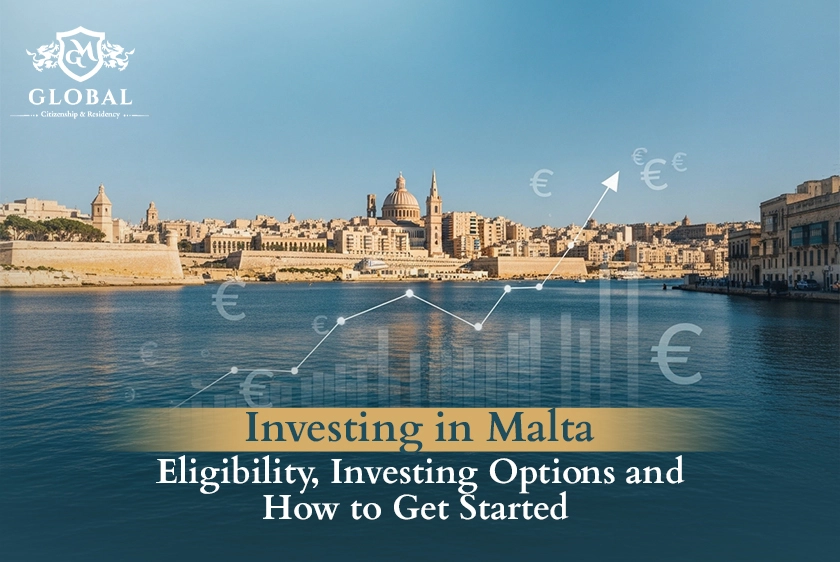
Malta has become an attractive destination for international investors seeking access to the European Union, a stable legal framework and opportunities across real estate, financial services, technology, tourism and internationally oriented businesses. As an EU and Eurozone member state, the country provides access to the European single market while using the euro as its official currency.
Its central Mediterranean location also positions Malta between Europe, North Africa and the Middle East, making it relevant to companies involved in regional trade, maritime services, aviation, logistics and cross-border professional services.
The Maltese economy has recorded strong expansion over the past decade, supported by tourism, online gaming, professional services and an expanding international workforce. Although growth has moderated from its previous rapid pace, Malta continues to outperform many larger European economies and maintains relatively low unemployment.
Investing in Malta can take several forms. Investors may purchase residential or commercial property, establish a trading or holding company, participate in regulated investment funds, support technology startups, acquire securities or combine an investment strategy with a qualifying residence programme.
A Malta real estate investment remains particularly popular among international buyers because of limited land availability, rental demand and the potential to combine property commitments with long-term residence planning. However, successful investing requires more than selecting an asset. Investors must consider taxation, regulation, licensing, ownership structures, due diligence and ongoing compliance.
This guide explains Malta’s investment climate, leading sectors, available structures, minimum capital requirements, tax obligations, government incentives, risks and the practical steps involved in building an investment strategy in Malta.
Why Invest in Malta?
Malta offers a combination of EU access, economic stability, an international business environment and specialised industries that can support both direct and portfolio investment.
Investors are particularly attracted by the country’s legal alignment with EU standards, English-speaking professional sector, established financial-services infrastructure and ability to accommodate cross-border business models.
Diverse and Promising Investment Opportunities
Malta’s economy supports investment across several industries, including:
- Real estate and property development
- Financial services
- Investment funds
- Fintech and digital payments
- iGaming
- Tourism and hospitality
- Maritime services
- Aviation
- Pharmaceuticals
- Advanced manufacturing
- Technology startups
- Professional and shared services
This diversity allows investors to select opportunities based on their risk tolerance, capital resources and preferred investment horizon.
Real estate can offer rental income and long-term asset exposure, while startups and technology businesses may provide higher growth potential with greater risk. Regulated funds and listed securities may be more suitable for investors seeking diversification or professional management.
Strategic Location and Strong Logistics
Malta is positioned along major Mediterranean trade routes and maintains commercial links with Europe, North Africa and the Middle East.
The Malta Freeport is an important regional transshipment hub, while the country’s maritime registry and shipping-services ecosystem support international maritime activity. Malta International Airport provides direct connections with major European destinations and supports both passenger travel and cargo operations.
This location benefits businesses involved in:
- International trade
- Shipping and ship management
- Logistics
- Aviation services
- Regional distribution
- Import and export operations
- Professional services supporting cross-border companies
Malta’s geography does not automatically make every logistics project commercially viable, but it can offer strategic advantages for businesses serving Mediterranean and EU markets.
Modern Infrastructure and Business Environment
Malta provides modern telecommunications, widespread broadband access, digital government services, professional office space and an established network of legal, accounting, banking and corporate-service providers.
English is an official language and is commonly used in contracts, business administration and professional services. This reduces communication barriers for international investors.
Malta’s infrastructure is particularly supportive of businesses that rely on digital operations, including:
- Software companies
- Fintech platforms
- Online gaming
- Remote professional services
- International customer support
- Digital marketing
- Fund administration
- Corporate and compliance services
However, investors should consider infrastructure pressures created by population growth, including congestion, limited land and competition for commercial and residential space.
Advantages of Being in the Eurozone
Malta uses the euro, reducing foreign-exchange exposure for investors conducting transactions within the Eurozone.
This can simplify:
- Cross-border invoicing
- EU payroll operations
- European supplier payments
- Capital contributions
- Property purchases
- Investment distributions
- Financial reporting
Participation in the Eurozone also places Malta within the European monetary and regulatory environment, which may provide greater familiarity and predictability for investors already operating in Europe.
Currency risk remains relevant for investors whose capital or income is denominated in US dollars, British pounds, Gulf currencies or other non-euro currencies.
Political and Economic Stability
Malta is a parliamentary republic with an established legal system and institutions operating within the broader framework of EU law.
The economy has maintained strong momentum over the past decade, although growth is expected to continue at a more moderate and sustainable pace. Tourism, domestic demand and export-oriented services remain important, while unemployment continues to be relatively low.
For investors, the most relevant stability factors include:
- EU legal protections
- Eurozone membership
- A functioning corporate registry
- Regulated financial markets
- An established court system
- Predictable company and property laws
- A broad professional-services sector
No jurisdiction is free from political, regulatory or economic risk. Investors should monitor policy changes, infrastructure constraints and developments affecting regulated industries.
Government Support and Investor Incentives
Malta encourages qualifying investment through support administered primarily by Malta Enterprise and other public institutions.
Depending on the project, assistance may include:
- Tax credits
- Cash grants
- Loan guarantees
- Interest-rate subsidies
- Research and development support
- Innovation assistance
- Startup funding
- Employee training incentives
- Support for tangible and intangible assets
Government incentives are not automatic. Applicants must meet eligibility requirements and normally obtain approval before incurring or committing to supported expenditure.
Gateway to Residency Through Investment
Qualifying investors may consider the Malta Permanent Residence Programme, which grants eligible applicants and approved dependants the right to reside, settle or stay indefinitely in Malta.
The programme is not based on one passive investment alone. It generally combines:
- A property purchase or rental commitment
- Government contributions and fees
- A charitable donation
- Proof of sufficient assets
- Health insurance
- Source-of-funds evidence
- Comprehensive due diligence
Permanent residence does not automatically grant citizenship and should not be presented as a guaranteed pathway to a Maltese passport.
High Quality of Life and Attractive Lifestyle
Investors who intend to spend time in Malta may also value its Mediterranean climate, English-language services, healthcare options, international schools and extensive expatriate community.
The country offers a compact lifestyle in which business districts, marinas, restaurants, residential areas and the airport are relatively close. This can be convenient for entrepreneurs managing European or international operations.
Malta also has drawbacks, including rising housing costs, traffic congestion, construction activity and limited large green spaces. Investors planning to relocate should evaluate lifestyle considerations separately from expected financial returns.
What Is Malta’s Investment Climate Like?
Malta’s investment climate is open, internationally oriented and strongly connected to the European economy. Its most competitive sectors are generally those that serve clients outside the small domestic market.
The country is particularly suitable for:
- Export-oriented services
- International holding and trading structures
- Regulated financial businesses
- Digital operations
- Tourism and hospitality
- Specialist manufacturing
- Maritime and aviation services
- Regional headquarters
- Back-office and shared-service centres
Investors benefit from access to experienced lawyers, accountants, auditors, fund administrators, fiduciaries and corporate-service providers.
At the same time, Malta is not a low-regulation jurisdiction. Financial services, gaming, virtual financial assets, insurance and other regulated activities require authorisation, governance systems, compliance personnel and continuing supervision.
Banking and onboarding can also take time because of anti-money-laundering, beneficial ownership and source-of-funds requirements.
Malta is therefore attractive for well-planned and properly structured investment, but less suitable for investors seeking minimal disclosure, informal arrangements or immediate access to regulated European markets without substantive compliance.
What Are the Investment Options in Malta?
Investors can access Malta through direct ownership, corporate structures, regulated investment vehicles, funds, securities and residence-linked property commitments.
The appropriate route depends on the investor’s objectives, preferred level of control, liquidity needs and risk profile.
Real Estate Investment
A Malta real estate investment may involve residential apartments, commercial premises, hospitality properties, development projects or long-term rental assets.
Potential return sources include:
- Long-term rental income
- Short-term accommodation income
- Capital appreciation
- Property development
- Commercial leasing
- Hospitality operations
Prime areas such as Sliema, St. Julian’s, Valletta and Special Designated Areas often command higher acquisition prices but may benefit from international demand. Gozo, southern Malta and central towns can offer lower entry costs, although rental demand and liquidity vary.
Foreign investors should review AIP permit requirements, Special Designated Area rules, stamp duty, notarial costs, planning permits and rental regulations before purchasing.
Property Special Purpose Vehicles for Asset Protection
A property Special Purpose Vehicle, or SPV, is a company established to acquire and hold a specific real-estate asset or portfolio.
The structure may help investors:
- Separate property liabilities from personal assets
- Hold several investors’ interests through shares
- Facilitate financing and joint ventures
- Simplify portfolio accounting
- Plan succession or future ownership transfers
- Isolate the risks of individual development projects
SPVs are commonly used for commercial property, development projects and multi-investor acquisitions. However, using a company does not automatically reduce tax or guarantee asset protection.
Corporate ownership can introduce additional obligations, including accounting, audit, beneficial ownership reporting, annual returns and corporate tax compliance. Financing terms and property transfer taxes may also differ from direct individual ownership.
Before using an SPV, investors should compare the complete legal and tax implications with direct personal ownership.
Real Estate Investment Trusts in Malta
REITs allow investors to obtain exposure to income-producing property through shares rather than purchasing and managing an individual asset.
However, investors should not assume that Malta offers the same dedicated REIT tax regime found in jurisdictions such as the United States or the United Kingdom. Real-estate exposure may instead be available through listed property companies, collective investment schemes, property funds or overseas REITs accessible through Maltese financial-service providers.
These structures can provide:
- Diversification across multiple properties
- Professional asset management
- Potential rental-income distributions
- Lower entry costs than direct property acquisition
- Greater liquidity where the instrument is publicly traded
Before investing, buyers should confirm whether the product is a regulated fund, listed company, overseas REIT or another real-estate vehicle. Fees, liquidity, leverage, tax treatment and underlying asset quality should be reviewed carefully.
Trust Ownership Solutions for High-Net-Worth Investors
High-net-worth investors may use a trust to hold property, company shares or investment assets as part of a wider wealth and succession strategy.
A trust can potentially support:
- Intergenerational wealth transfer
- Family governance
- Succession planning
- Asset administration for beneficiaries
- Continuity after the settlor’s death
- Separation between legal ownership and beneficial interests
Trusts should not be used merely to conceal ownership. Maltese and EU anti-money-laundering rules require appropriate disclosure of beneficial ownership to competent authorities and regulated service providers.
The tax treatment depends on the trust, residence of the parties, location of assets and nature of distributions. Trust structures should therefore be established only after coordinated legal, tax and estate-planning advice.
Company Formation and Business Investment
Investors can establish or acquire Maltese companies to conduct trading, consulting, technology, manufacturing, financial or international service activities.
The private limited liability company is the most common structure. It offers limited shareholder liability and can be formed with one shareholder and one director, subject to company-law requirements.
Investors may also establish:
- Holding companies
- Joint ventures
- Branches of foreign companies
- Public limited companies
- Partnerships
- Project-specific companies
- Family investment companies
Company formation alone does not guarantee tax advantages. The company must have an appropriate commercial purpose, governance structure, accounting system and operational substance.
Investment Funds and Collective Investment Schemes
Malta regulates several categories of collective investment schemes, including:
- Professional Investor Funds
- Alternative Investment Funds
- Notified Alternative Investment Funds
- UCITS funds
- Retail collective investment schemes
These structures can invest in securities, property, private equity, credit, venture capital or other permitted assets.
Malta can be attractive to fund promoters because of its EU regulatory position and established ecosystem of administrators, depositaries, auditors and investment managers.
Funds are regulated products. The applicable structure depends on investor classification, strategy, assets, leverage and distribution plans. Investors should verify that any fund and service provider are properly authorised or recognised.
Financial Services and Capital Markets
Malta’s financial sector includes banking, insurance, investment services, fund administration, payments, pensions, wealth management and capital-markets activity.
Investors may access:
- Government and corporate bonds
- Listed equities
- Collective investment schemes
- Structured products
- Insurance-based investments
- Professionally managed portfolios
The Malta Stock Exchange provides a regulated market for listed securities, while licensed investment firms and fund managers offer access to broader international markets.
Investors should assess fees, currency exposure, liquidity and product risk rather than selecting products solely because they are available through a Maltese institution.
Startups, Technology, and Innovation Sectors
Malta’s digital economy creates opportunities in:
- Fintech
- Software development
- Artificial intelligence
- Cybersecurity
- Digital payments
- iGaming technology
- Blockchain applications
- Regulatory technology
- Online platforms
- Digital health
- Business-process automation
Startup investment offers potentially high returns but also a substantial risk of failure. Investors should conduct detailed reviews of intellectual property, management capability, regulatory exposure, customer acquisition costs and funding needs.
Malta Enterprise provides support programmes for qualifying innovative projects, but grants should supplement rather than replace a viable business model.
Residency and Citizenship Investment Programs
The Malta Permanent Residence Programme remains the principal residence-by-investment route for qualifying applicants. It provides permanent residence following successful due diligence and completion of the programme’s financial and property requirements.
Citizenship must be treated separately. In April 2025, the Court of Justice of the European Union ruled that Malta’s investor citizenship scheme was contrary to EU law. Investors should therefore not rely on outdated claims that citizenship can still be purchased through a standard contribution-and-property programme.
Any citizenship advice must reflect current Maltese law and the consequences of that judgment. Residence, naturalisation and citizenship by merit or exceptional contribution are distinct legal concepts and do not guarantee approval.
What Are the Best Sectors to Invest in Malta?
Malta’s strongest investment sectors generally combine international demand, specialised regulation and government support.
Real Estate and Property Development
Residential property remains attractive because of demand from local households, international workers and expatriates.
Commercial opportunities include:
- Offices
- Retail premises
- Warehouses
- Hospitality assets
- Serviced accommodation
- Mixed-use developments
Investors should be cautious about assuming that historical appreciation will continue indefinitely. Location, condition, legal title, rental regulation and planning permissions remain essential.
Financial Services
Financial services are a major component of Malta’s internationally oriented economy.
Opportunities exist in:
- Investment management
- Fund administration
- Insurance
- Payments
- Compliance technology
- Pensions
- Corporate services
- Fintech
This sector requires licensing and substantive compliance. Investors should expect detailed regulatory scrutiny and ongoing reporting.
Tourism and Hospitality
Tourism supports hotels, restaurants, attractions, transport, events and short-term accommodation.
Higher-value opportunities may include:
- Boutique hotels
- Luxury travel
- Wellness tourism
- Conference services
- Cultural experiences
- Marine tourism
- High-quality serviced accommodation
Tourism investment remains exposed to seasonality, labour availability, global travel conditions and changing short-let regulations.
Technology and Fintech
Malta supports digital and innovation-led businesses through its regulatory institutions, international workforce and government incentive programmes.
Fintech opportunities may include:
- Payment technology
- Compliance systems
- Digital identity
- Cybersecurity
- Financial software
- Regulated digital assets
- Business automation
Licensing requirements should be established before committing capital.
Maritime and Aviation Industries
Malta has established maritime and aviation registries and offers services related to:
- Vessel and aircraft registration
- Ship and aircraft management
- Maintenance
- Leasing
- Finance
- Insurance
- Legal and technical support
These sectors are capital intensive and highly specialised, making professional and regulatory expertise essential.
Education and Professional Services
Malta’s international workforce and regulated industries create demand for:
- Professional education
- Language training
- Compliance training
- Executive programmes
- Legal services
- Accounting
- Recruitment
- Tax advisory
- Corporate administration
Service businesses should generally target international or specialised clients rather than rely exclusively on Malta’s small domestic population.
Advanced Manufacturing and Semiconductor Production
Malta supports higher-value manufacturing in areas such as electronics, precision engineering, semiconductors and specialised components.
The country is unlikely to compete with larger jurisdictions in land-intensive, low-cost mass production. Its advantage lies in:
- Skilled production
- High-value components
- Quality-controlled manufacturing
- Semiconductor packaging and testing
- Research-linked industrial projects
- Access to EU supply chains
Investors should assess energy costs, workforce availability, industrial property and supply-chain resilience before proceeding.
Pharmaceuticals and Life Sciences Hub
Malta has developed activity in pharmaceuticals, medical products, research and healthcare-related manufacturing.
Investment opportunities may include:
- Generic pharmaceuticals
- Medical-device production
- Laboratory services
- Clinical and regulatory support
- Biotechnology
- Digital health
- Specialist healthcare services
This sector benefits from EU market access but requires strict product, manufacturing and regulatory compliance.
Knowledge-Based and Shared Services Sectors
Malta is suitable for internationally oriented shared-service and knowledge-based operations, including:
- Finance and accounting centres
- Customer support
- Compliance operations
- Treasury functions
- Human-resources administration
- Legal-process support
- Technical support
- Data and analytics
- Regional management offices
English-language capability and access to an international workforce support these activities. However, investors should consider talent competition, salary pressure and the need to recruit from abroad.
What Is the Minimum Capital Required to Invest in Malta?
There is no universal minimum capital requirement for investing in Malta. The amount depends entirely on the selected route.
Examples include:
- Private limited company: The statutory minimum authorised share capital is relatively low, but practical operating capital should reflect the business plan.
- Residential property: Entry prices depend on location and property type, with premium coastal areas requiring substantially more capital.
- Commercial property or development: Capital needs may reach hundreds of thousands or millions of euros.
- Investment funds: Minimum subscriptions depend on the fund category and investor classification.
- Startups: Seed investment can begin at relatively modest amounts, but follow-on financing may be required.
- Permanent residence: Applicants must meet the current property, contribution, donation, asset and fee requirements of the MPRP.
The previously quoted figure of approximately €169,000 should not be treated as a universal minimum for Malta investment. It may represent a particular estimate for one residence route under a specific cost structure, not the minimum needed for business, property or financial investment generally.
Investors should prepare a full budget that includes professional fees, tax, due diligence, financing costs, licensing, insurance and working capital.
What Taxes Do Foreign Investors Pay in Malta?
Taxation depends on the investment vehicle, source of income, residence status, asset type and applicable treaty provisions.
Corporate Tax
Maltese companies are generally subject to corporate tax at 35% on worldwide income and capital gains.
Malta operates a full imputation system. When taxed profits are distributed, shareholders may be entitled to claim a refund of part or all of the tax paid by the company, depending on the income and applicable rules.
For qualifying trading income, the commonly referenced six-sevenths refund can produce an effective rate of approximately 5%. This result is not automatic and should not be marketed as the standard tax rate for every Maltese company.
Malta has also introduced an optional final corporate tax regime for qualifying entities, subject to conditions and a minimum election period. Investors should compare regimes based on their specific structure.
Dividend Tax
Malta’s imputation system is designed to prevent the same company profit from being taxed again at shareholder level.
Malta generally does not impose withholding tax on dividends paid to non-resident shareholders, subject to applicable law and anti-abuse provisions.
The tax treatment in the shareholder’s country of residence may still apply. Investors must therefore review both Maltese taxation and their home-country obligations.
Capital Gains Tax
Capital gains may be taxable when they arise from Maltese property, shares in certain Maltese companies or other taxable assets.
The participation exemption may apply to qualifying holdings, subject to detailed conditions. It should not be assumed that every sale of shares is exempt.
Property transfers commonly fall under Malta’s final withholding tax rules rather than a standard tax on net capital gain.
Value-Added Tax
Malta’s standard VAT rate is 18%.
Reduced rates and exemptions apply to certain goods and services. VAT treatment can become particularly important in:
- Hospitality
- Commercial leasing
- Construction
- Professional services
- Financial services
- Cross-border trade
- Digital services
Businesses should confirm their VAT registration and reporting obligations before commencing operations.
Property Taxes and Stamp Duty
Malta does not impose a general annual tax merely for owning property.
However, buyers usually pay stamp duty on property acquisitions. The standard rate is commonly 5%, although reliefs may apply in qualifying cases.
Investors should also budget for:
- Notary fees
- Searches
- Registration costs
- Legal advice
- AIP permit costs where relevant
- Financing fees
Rental income and later disposal of the property can create additional tax liabilities.
Double Taxation Agreements
Malta has a broad network of double taxation agreements intended to reduce duplicate taxation of the same income.
Treaties may affect:
- Business profits
- Dividends
- Interest
- Royalties
- Employment income
- Capital gains
- Pensions
Treaty protection depends on tax residence, beneficial ownership, the source of income and the specific agreement. Investors should not assume that treaty access automatically eliminates tax.
Government Incentives and Support for Investors in Malta
Malta Enterprise administers support programmes for qualifying startups, SMEs, industrial projects and innovation-led businesses.
Financial Grants and Tax Credits
Support may be available for expenditure related to:
- Employee costs
- Machinery and equipment
- Digital technology
- Innovation
- Business development
- Industrial facilities
- Intellectual property
- Research and development
The current Micro Invest framework can provide tax credits based on qualifying expenditure, with enhanced support for certain applicants and businesses operating from Gozo.
Another Business Development scheme can support a portion of qualifying expenditure, subject to programme limits and approval.
Investment Aid, Loan Guarantees, and Subsidized Financing
The Invest programme supports qualifying initial investment projects involving:
- New establishments
- Expansion of existing operations
- Diversification
- New production processes
- Tangible and intangible assets
Support may take the form of:
- Tax credits
- Cash grants
- Loan-interest subsidies
- Loan guarantees for eligible SMEs
Applications generally need to be submitted and approved before supported expenditure is committed.
Startup Funding and Accelerator Programs
Innovation-focused startups may access:
- Seed funding
- Accelerator support
- Innovation grants
- Research assistance
- Tax credits
- Mentoring
- Investor introductions
- Market-development support
Programmes have different definitions of eligible startups, expenditure and sectors. Funding should not be assumed until written approval is obtained.
Advisory Services and One-Stop Investor Support
Malta Enterprise and Business First provide information and assistance relating to:
- Permits
- Incentives
- Company setup
- Employment
- Expansion
- Business support
- Regulatory referrals
Investors should still use independent legal, financial and tax advisors because government agencies do not replace transaction-specific professional advice.
How to Start Investing in Malta
1. Define Your Investment Objectives
Decide whether your main objective is:
- Income
- Capital growth
- Business expansion
- Portfolio diversification
- European market access
- Residence planning
- Wealth preservation
- Succession planning
Your objective will determine the appropriate asset, ownership structure and investment horizon.
2. Conduct Market Research and Feasibility Analysis
Assess:
- Market demand
- Competitors
- Expected returns
- Operating costs
- Regulation
- Taxation
- Financing
- Exit options
- Workforce requirements
- Currency exposure
For business projects, prepare realistic financial projections and test assumptions against the limited domestic market.
3. Choose the Appropriate Investment Structure
Possible structures include:
- Direct personal ownership
- Private limited company
- Holding company
- SPV
- Partnership
- Trust
- Regulated fund
- Joint venture
- Branch of a foreign company
The correct structure should balance control, liability, tax, succession and compliance.
4. Register a Company or Legal Entity, If Applicable
Business investors may need to:
- Reserve a company name
- Prepare constitutional documents
- Identify directors, shareholders and beneficial owners
- Establish a registered office
- Deposit share capital
- Submit incorporation documents
- Register for tax and VAT
- Establish accounting systems
Companies must maintain ongoing filings after incorporation.
5. Secure the Required Licenses or Regulatory Approvals
Regulated activities must not begin before the relevant authorisation is obtained.
Financial services are generally supervised by the Malta Financial Services Authority, while gaming activities fall under the Malta Gaming Authority.
Other sectors may require permits relating to:
- Tourism
- Planning
- Environment
- Health
- Transport
- Maritime activities
- Aviation
- Employment
6. Open Banking and Financial Infrastructure
Banks and payment institutions normally request detailed information about:
- Beneficial ownership
- Business activities
- Source of funds
- Expected transactions
- Customers and suppliers
- Tax residence
- Financial projections
Account opening may take longer than company incorporation. Investors should begin onboarding early and avoid structuring transactions around an assumed approval date.
7. Make the Investment and Launch Operations
After completing the legal and financial setup, investors can:
- Transfer capital
- Purchase assets
- Execute property deeds
- Hire employees
- Sign commercial contracts
- Launch products or services
- Begin regulated operations after approval
All transactions should be properly documented and supported by legitimate source-of-funds evidence.
8. Maintain Compliance and Optimize the Investment
Ongoing requirements may include:
- Annual returns
- Financial statements
- Audits
- Corporate tax returns
- VAT filings
- Payroll reporting
- Licence renewals
- Beneficial ownership updates
- Transaction monitoring
- Property reporting
Investors should conduct regular performance and compliance reviews rather than waiting until a filing deadline or exit transaction.
Challenges and Risks of Investing in Malta
Important risks include:
- Limited domestic market size
- High property prices in prime areas
- Talent shortages
- Regulatory complexity
- Banking delays
- Infrastructure pressure
- Dependence on international tourism and services
- Limited land and industrial space
- Construction and planning restrictions
- Changes to residence or tax programmes
Investors should also avoid overestimating Malta’s tax advantages. Effective tax outcomes depend on legitimate structure, commercial substance and compliance with Maltese, EU and home-country rules.
Tips for Foreign Investors in Malta
- Use licensed legal, tax and corporate professionals.
- Conduct independent financial and legal due diligence.
- Verify regulatory permissions before investing.
- Plan bank onboarding early.
- Compare personal, corporate, trust and fund structures.
- Confirm property title and planning permissions.
- Review exit taxation before entering the investment.
- Maintain clear source-of-funds evidence.
- Avoid relying on promotional return estimates.
- Assess whether the investment can scale beyond Malta’s domestic market.
- Apply for incentives before committing eligible expenditure.
- Separate residence planning from investment performance analysis.
What Is the Safest Investment Option in Malta?
There is no universally safest investment.
Malta government securities or appropriately diversified, regulated investment funds may generally offer lower volatility than property development, startups or concentrated business investments. Their returns, however, may also be lower.
Completed residential property in a high-demand location can provide tangible asset exposure and rental income, but it is not risk-free. Property prices can decline, tenants may default, maintenance costs can rise and liquidity can be limited.
The safest option depends on:
- Capital-preservation goals
- Liquidity requirements
- Investment horizon
- Currency exposure
- Income needs
- Risk tolerance
Diversification is usually more prudent than placing all available capital into one property or company.
Which Investments in Malta Offer the Highest ROI?
Potentially high-return sectors include:
- Property development
- Premium short-term accommodation
- Technology startups
- Fintech
- iGaming technology
- Specialist tourism
- Private equity
- High-growth digital services
Higher expected returns normally involve higher risk, greater regulatory exposure or lower liquidity.
Claims of guaranteed rental yields or fixed high returns should be treated cautiously. Investors should analyse net returns after financing, management, tax, vacancies, maintenance and exit costs.
Can I Invest in Malta Without Being in the Country?
Yes. Many investments can be established or managed remotely through licensed local professionals and properly executed powers of attorney.
Investors may be able to:
- Form a company
- Acquire shares
- Invest in funds
- Purchase property
- Open corporate structures
- Complete certain compliance procedures remotely
However, banks, regulators, notaries or residence authorities may request physical attendance, biometric enrolment, interviews or original documentation.
Remote investment does not remove tax, disclosure or due-diligence obligations.
Which Sectors Should You Avoid Investing in Malta?
Investors should be particularly cautious about:
- Businesses dependent solely on Malta’s small consumer market
- Undifferentiated restaurants and retail concepts
- Highly regulated activities without sector expertise
- Land-intensive heavy manufacturing
- Speculative developments without secure permits
- Short-term rentals that cannot comply with licensing rules
- Businesses dependent on low-cost labour
- Projects relying entirely on unapproved government grants
A sector should not necessarily be avoided because it is difficult. It should be avoided when the investor lacks the capital, expertise, regulatory capacity or market access required to compete.
Malta vs Greece: Which Is Better for Investment?
Malta and Greece serve different investor profiles.
| Factor | Malta | Greece |
| Domestic market | Small | Significantly larger |
| Business language | English widely used | Greek remains important |
| Financial services | Highly developed for Malta’s size | Broader economy but different specialisations |
| Property entry cost | High in prime districts | Lower in many regions |
| Tourism | Strong and concentrated | Large and geographically diverse |
| Business administration | Compact and internationally oriented | Can involve more regional and administrative variation |
| Best suited for | International services, finance, technology and specialised businesses | Tourism, logistics, energy, property and larger-market operations |
Malta may be more suitable for investors seeking an English-speaking base for internationally oriented operations. Greece may offer greater scale, geographic variety and lower entry costs in many property markets.
The right choice depends on the sector, investment size, target customers and intended exit strategy.
FAQs
How to Invest Money in Malta?
Investors can allocate capital to Maltese property, companies, government or corporate securities, regulated funds, startups and private businesses.
The process should begin with defining the financial objective and risk tolerance. Investors should then select an appropriate structure, conduct legal and commercial due diligence, confirm tax obligations and complete banking or regulatory requirements.
Investment decisions should be based on expected net return, liquidity and risk rather than residency benefits alone.
How Long Will It Take to Get PR in Malta?
The Malta Permanent Residence Programme involves document preparation, submission, due diligence, approval and completion of the programme commitments.
The timeline varies according to the complexity of the applicant’s background, family composition, source of wealth, document readiness and government processing. Applicants should generally prepare for a process lasting several months rather than relying on a guaranteed approval date.
Working with an authorised agent and submitting complete, consistent documentation can reduce avoidable delays.
Is Malta’s Citizenship by Investment Still Active?
No investor should rely on the former marketing concept of buying Maltese citizenship through a standard citizenship-by-investment programme.
On 29 April 2025, the Court of Justice of the European Union ruled that Malta’s investor citizenship scheme was contrary to EU law because Union citizenship could not result from a commercial transaction.
Malta’s permanent residence programme remains separate and continues to operate, but permanent residence does not automatically lead to citizenship.
Any citizenship route must be assessed under current Maltese law, including ordinary naturalisation or other strictly discretionary legal provisions, without any guarantee of approval.
Does Malta Tax Foreign-Sourced Income?
It depends on the investor’s tax residence, domicile, legal structure and whether income is remitted to Malta.
Maltese companies are generally taxed on worldwide income and capital gains. Foreign companies carrying on business in Malta may be taxed on income arising in Malta.
Individuals who are resident but not domiciled or not ordinarily resident may be taxed on Maltese-source income and foreign income received in Malta. Foreign capital gains may receive different treatment under the remittance basis.
Tax residence and remittance rules are complex, particularly where funds contain both income and capital. Professional cross-border tax advice is recommended.
Get Tailored Investment Advice
Investing in Malta can provide access to property, international business, regulated funds, technology ventures and European residence planning. However, the most appropriate opportunity depends on your capital, tax position, risk tolerance and long-term objectives.
GICG supports investors, entrepreneurs and families with coordinated guidance on Malta real estate investment, business establishment, residency planning, property acquisition and investment structuring.
Our team can help you:
- Evaluate suitable investment routes
- Coordinate property and corporate due diligence
- Understand residency-linked commitments
- Structure a Maltese business presence
- Prepare application documentation
- Work with relevant legal, tax and regulatory professionals
- Develop a long-term investment and relocation strategy
Contact GICG today to receive tailored investment advice and identify the most suitable Malta strategy for your financial, business and mobility goals.