
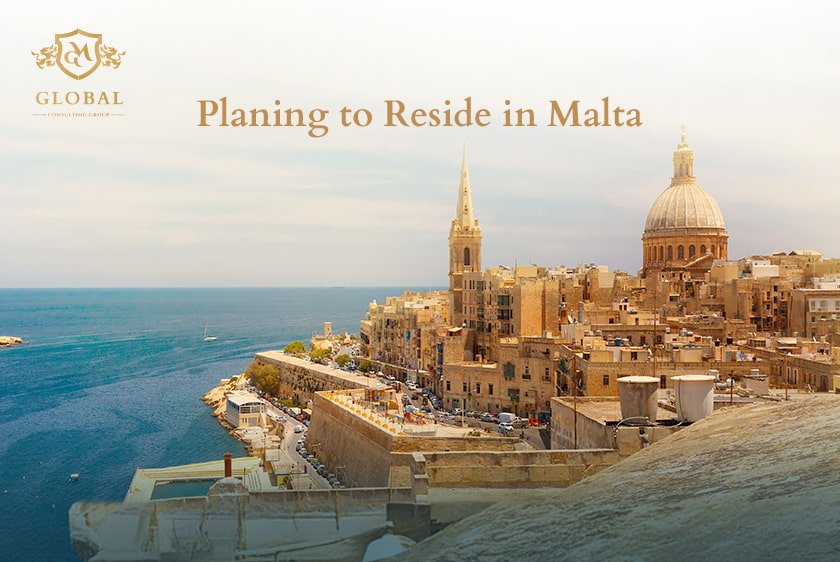
Imagine establishing a permanent European residence in the heart of the Mediterranean, with an English-speaking environment, an established business ecosystem, and convenient connections across Europe. For eligible non-EU investors and their families, Malta permanent residence by investment: Live in Malta can turn that objective into a long-term residence strategy.
The Malta Permanent Residence Programme (MPRP) is Malta’s official residency-by-investment framework. It provides qualifying third-country nationals with the right to reside permanently in Malta while allowing short-stay visa-free travel throughout the Schengen Area.
Unlike temporary residence permits, the MPRP provides permanent residence status from the programme itself. At the same time, applicants are not required to relocate to Malta full-time, making the programme particularly relevant to internationally mobile investors and families seeking a European residence base without immediately changing where they primarily live or conduct business.
However, MPRP status must be distinguished from Maltese citizenship. It provides permanent residence—not a Maltese passport, EU citizenship, or unrestricted rights to live and work throughout the European Union.
This guide explains the current MPRP eligibility criteria, investment and property requirements, costs, application process, residence rights, family considerations, and ongoing obligations.
Malta Permanent Residence Program Overview
The Malta Permanent Residence Programme is a regulated residence-by-investment route administered by Residency Malta Agency.
It is designed for qualifying nationals of countries outside the EU, EEA, and Switzerland who want permanent residence in Malta.
Successful applicants receive the right to stay and reside permanently in Malta and can travel within the Schengen Area for short stays of up to 90 days within any 180-day period.
The programme also allows qualifying family members to be included and provides applicants with the choice of renting or purchasing qualifying residential property.
MPRP applications must be submitted through a Licensed Agent and are subject to rigorous, multi-tiered due diligence.
The programme combines four central financial components:
- Qualifying residential property
- Government contribution
- Administrative fee
- Donation to a qualifying Maltese NGO
Applicants must additionally satisfy financial-capacity, health-insurance, documentation, and due-diligence requirements.
Who Is Eligible for the MPRP?
The programme is generally available to eligible third-country nationals who are not EU, EEA, or Swiss citizens.
The main applicant must satisfy the programme’s eligibility requirements, including:
- Being at least 18 years old
- Holding eligible nationality
- Having a clean criminal record
- Passing Residency Malta’s due-diligence assessment
- Demonstrating stable and regular financial resources
- Meeting the required capital-asset test
- Maintaining qualifying health insurance
- Holding valid travel documentation
- Meeting the qualifying property requirement
- Completing the required government contribution, administrative fee, and NGO donation
Applicants from jurisdictions excluded by Residency Malta from time to time are not eligible.
The programme can also include qualifying family members. Depending on their circumstances, these may include:
- Spouse or qualifying partner
- Minor children
- Qualifying principally dependent adult children
- Qualifying dependent parents
- Qualifying dependent grandparents
Dependency requirements are important, particularly for adult children, parents, and grandparents. Applicants should therefore confirm family eligibility before submitting the application.
5 Key Benefits of Malta Permanent Residence
The MPRP combines several benefits that can make it attractive to international investors and families.
- Permanent Residence Status
Successful applicants obtain permanent residence in Malta rather than having to progress through a sequence of short-term investor visas before becoming permanent residents.
- Schengen Mobility
MPRP beneficiaries can travel visa-free within the Schengen Area for short stays of up to 90 days within any 180-day period, subject to applicable travel conditions.
- No Prescribed Minimum Stay Requirement
The programme does not require beneficiaries to spend a fixed number of days in Malta each year simply to maintain MPRP status.
This provides flexibility for investors who continue to manage businesses, assets, or family responsibilities internationally.
- Family Inclusion
The MPRP can accommodate qualifying family members across multiple generations, making it particularly relevant to investors whose residence planning involves more than the main applicant.
- Rental or Purchase Flexibility
Applicants are not required to purchase Maltese property.
They can satisfy the qualifying property requirement by either purchasing a qualifying residence or entering into a qualifying rental arrangement.
Together, these features make the programme particularly relevant to investors looking for long-term European residence while maintaining substantial flexibility over their lifestyle and capital allocation.
Malta Permanent Residence by Investment
The term Malta permanent residence by investment describes the MPRP’s combination of financial capacity, qualifying property, government payments, and compliance requirements.
It is important to understand that the programme is not based on purchasing a single investment product.
Applicants must demonstrate that they satisfy the programme’s broader financial and personal eligibility requirements and successfully complete due diligence.
The MPRP also grants residence rather than citizenship.
Obtaining permanent residence through the programme does not automatically provide a Maltese passport or guarantee future naturalisation.
Malta MPRP Investment Requirements
The current MPRP requires applicants to demonstrate sufficient capital assets under one of two alternatives:
Option A
- At least €500,000 in capital assets
- At least €150,000 of those assets must be financial assets
Option B
- At least €650,000 in capital assets
- At least €75,000 of those assets must be financial assets
Applicants must also demonstrate stable and regular financial resources sufficient to maintain themselves and their dependants without relying on Malta’s social-assistance system.
These capital-asset thresholds should not be confused with programme expenditure. Applicants do not pay €500,000 or €650,000 to the Maltese government.
Separately, applicants must:
- Pay the applicable administrative fee
- Make the required government contribution
- Purchase or rent qualifying property
- Make the required NGO donation
- Obtain qualifying health insurance
- Pay applicable residence-card and dependant fees
- Cover professional and documentation expenses
Expenses of Obtaining Maltese Permanent Residency
The current MPRP financial structure differs significantly from earlier versions of the programme.
Under the current framework, the principal programme costs include:
- €60,000 non-refundable administrative fee
- €37,000 government contribution
- €2,000 qualifying NGO donation
- €500 residence-card fee per person for five years
- €7,500 fee for each adult dependant other than the spouse
- Qualifying property through purchase or rental
Professional fees, insurance, translations, certifications, property-related expenses, banking costs, and other third-party expenses may apply separately.
1. Property Purchase Option
Applicants choosing the purchase route must acquire a qualifying residential property in Malta or Gozo with a minimum value of:
€375,000
The property must generally be retained for at least five years.
The applicant must also satisfy the other programme requirements, including:
- €60,000 administrative fee
- €37,000 government contribution
- €2,000 NGO donation
- Applicable dependant fees
- Residence-card fees
- Health insurance
- Professional and property transaction expenses
The €375,000 purchase price is an asset acquisition rather than a government fee.
Applicants should also budget separately for property-related expenses such as notarial fees, searches, applicable taxes or duties, professional advice, and maintenance.
2. Property Rental Option (Lower Upfront Investment)
Applicants who prefer not to purchase property can satisfy the MPRP property requirement through a qualifying rental.
The current minimum qualifying rent is:
€14,000 per year
The rental property may be situated in Malta or Gozo and must generally be maintained for the initial five-year qualifying period.
The applicant must additionally pay:
- €60,000 administrative fee
- €37,000 government contribution
- €2,000 NGO donation
- Applicable adult dependant fees
- Residence-card fees
- Insurance and professional expenses
The rental route requires substantially less capital to be tied up in Maltese real estate, although rent becomes a recurring cost.
After the initial five-year qualifying period, MPRP beneficiaries must continue maintaining a residential property in Malta or Gozo, although the original qualifying purchase or rental threshold no longer needs to be maintained.
Examples of Real Estate Available for Purchase under the MPRP
The MPRP does not require applicants to purchase a particular style of property or property in a specific premium district.
Provided the property satisfies programme and legal requirements and meets the minimum qualifying value, applicants can consider different residential options.
Examples may include:
- Apartments in Sliema
- Residences in St. Julian’s
- Apartments or houses in Valletta
- Villas in Mellieħa
- Residential properties in Madliena
- Modern developments in central and coastal Malta
- Residential properties in Gozo
- Properties within Special Designated Areas
Applicants should not choose property solely because it meets the €375,000 programme threshold.
Location, market value, condition, resale prospects, maintenance costs, legal title, personal use, and potential rental strategy should also be assessed.
The programme’s property requirement and the property’s investment potential are two separate considerations.
Current MPRP rules also provide certain possibilities for leasing purchased property situated in Special Designated Areas, subject to applicable programme conditions.
Malta Permanent Residence Permit Cost for a Family
The cost for a family depends on its composition and whether the applicant rents or purchases property.
The core programme expenses currently include:
| Cost Component | Current Requirement |
| Administrative fee | €60,000 |
| Government contribution | €37,000 |
| NGO donation | €2,000 |
| Property purchase | Minimum €375,000 |
| Qualifying rent | Minimum €14,000/year |
| Adult dependant other than spouse | €7,500 each |
| Residence card | €500 per person / five years |
A spouse does not attract the €7,500 adult-dependant fee, while qualifying other adult dependants do.
This means there is no single accurate “family of four price” without knowing:
- Who the four family members are
- Their ages
- Their relationship to the main applicant
- Whether adult dependants are included
- Whether the family rents or purchases
- Professional-service costs
- Property transaction expenses
- Insurance costs
Applicants should therefore obtain a family-specific calculation rather than rely on a generic minimum investment figure.
How to Obtain Malta Permanent Residency by Investment
The MPRP follows a structured application and due-diligence process.
Step 1: Initial Eligibility Assessment
The applicant’s nationality, financial position, family structure, background, and residence objectives are reviewed.
Step 2: Appoint a Licensed Agent
MPRP applications must be submitted through a Licensed Agent.
Step 3: Prepare the Application
The applicant compiles the required personal, civil, financial, business, banking, source-of-funds, and source-of-wealth documentation.
Step 4: Submit the Application
The Licensed Agent submits the application and supporting documentation to Residency Malta Agency.
Step 5: Due Diligence
Residency Malta conducts rigorous, multi-tiered due diligence.
Checks can extend beyond the main applicant and dependants to donors, benefactors, and relevant business associates.
Step 6: Application Assessment and Decision
The Agency reviews the application and may request additional documentation or clarification before reaching its decision.
Step 7: Complete Programme Requirements
Following the relevant approval stage, applicants complete the qualifying property, government contribution, donation, insurance, and other outstanding programme requirements.
Step 8: Biometrics and Residence Formalities
Applicants complete the required biometric and residence-card procedures.
Step 9: Final Residence Documentation
Once all applicable conditions are satisfied, permanent residence documentation can be issued.
Malta Permanent Residence Application Processing Time
Applicants should not rely on a guaranteed 4–6 month MPRP processing period.
Residency Malta does not promise the same fixed processing time for every application. The Agency describes applications as proceeding through a structured process with decisions communicated within a reasonable timeframe.
Actual processing depends on factors such as:
- Completeness of the application
- Family composition
- Number of dependants
- Complexity of source of wealth
- International business interests
- Due-diligence findings
- Requests for additional information
- Speed of completing post-approval obligations
- Biometrics and card issuance
Investors with complex international financial structures should therefore allow adequate time for due diligence and avoid making irreversible relocation decisions based on an assumed approval date.
Maintaining Malta Permanent Residency and Renewing Residency Cards
Obtaining approval does not eliminate ongoing programme obligations.
During the first five years, beneficiaries must continue satisfying applicable MPRP requirements, including maintaining the qualifying property.
Beneficiaries should also maintain:
- Appropriate health insurance
- Required residential arrangements
- Accurate information with Residency Malta
- Compliance with applicable programme conditions
The Agency conducts compliance monitoring during the initial period.
Residence cards are issued for specified validity periods and need to be renewed as required. The current MPRP residence-card fee is €500 per person for a five-year period.
After the initial five-year qualifying-property period, beneficiaries no longer need to maintain a property meeting the original €375,000 purchase or €14,000 annual rental threshold.
They must, however, continue maintaining a residential property in Malta or Gozo.
Permanent residence status and the physical residence card should therefore be distinguished: the underlying status is permanent, while the card itself requires periodic renewal.
Other Ways to Obtain Malta Permanent Residency
The MPRP is not the only route through which someone may eventually acquire permanent or long-term residence rights in Malta.
The appropriate route depends on nationality and circumstances.
For example, eligible third-country nationals who have legally and continuously resided in Malta for at least five years may potentially qualify for EU long-term resident status, subject to conditions concerning continuous residence, financial resources, integration, language requirements, and other applicable criteria.
EU nationals and qualifying family members operate under a different legal framework. EU citizens who have legally and continuously resided in Malta for five years may acquire permanent residence rights subject to the applicable EU free-movement rules.
Malta also provides temporary or purpose-specific residence routes connected with:
- Employment
- Family reunification
- Study
- Remote work
- Other qualifying circumstances
These routes should not be treated as interchangeable with the MPRP.
The principal difference is that MPRP provides qualifying investors with a direct permanent-residence route without first requiring five years of continuous physical residence in Malta.
Rights and Privileges After Getting Malta Permanent Residency
Successful MPRP beneficiaries obtain several important rights and practical benefits.
These include:
- The right to stay and reside permanently in Malta
- Short-stay visa-free Schengen travel
- Ability to include qualifying family members
- Ability to maintain residence without a prescribed annual minimum-stay requirement
- Ability to establish Malta as a full-time home if desired
However, MPRP beneficiaries should also understand the programme’s limits.
Permanent residence does not automatically provide:
- Maltese citizenship
- A Maltese passport
- EU citizenship
- Unrestricted employment rights throughout the EU
- Automatic free public healthcare
- Automatic free education
- Automatic Maltese tax residence
- Automatic preferential tax treatment
Employment in Malta remains subject to applicable employment authorization requirements.
Tax residence must also be assessed separately. The familiar 183-day threshold can be relevant, but tax residency is a factual and legal question and should not be reduced to the statement that someone is automatically non-tax-resident simply because they spend fewer than 183 days in Malta.
Does Malta Permanent Residence Allow Visa-Free Travel in Schengen?
Yes.
MPRP beneficiaries can travel visa-free within the Schengen Area for up to 90 days in any 180-day period.
Travellers should carry their valid residence card and travel document and comply with applicable Schengen travel requirements.
This benefit is particularly valuable for investors and families who regularly travel across Europe for business, leisure, or family reasons.
However, Schengen travel rights do not mean unrestricted settlement rights in every participating country.
An MPRP beneficiary cannot simply move permanently to another Schengen country or take employment there solely on the basis of the Maltese MPRP card. The relevant country’s immigration and employment rules continue to apply.
How Global Helps You Secure Malta Permanent Residence
Applying for the MPRP involves significantly more than completing an application form.
Investors must coordinate financial eligibility, family documentation, source-of-wealth evidence, due diligence, property arrangements, insurance, government requirements, and ongoing compliance.
Global for Citizenship and Residency (GICG) can support investors and families throughout the process, including:
- Preliminary eligibility assessment
- Family eligibility review
- Financial-requirement assessment
- Document preparation
- Source-of-funds and source-of-wealth preparation
- Due-diligence readiness
- Coordination with the appropriate Licensed Agent
- Property-option guidance
- Application coordination
- Post-approval support
A properly prepared application can help reduce avoidable delays caused by missing, inconsistent, or insufficiently documented information.
Key Points About Permanent Residence by Investment in Malta
For investors evaluating Malta permanent residence by investment: Live in Malta, the most important points are:
- The MPRP grants permanent residence—not citizenship.
- It is designed for eligible non-EU, non-EEA, and non-Swiss nationals.
- There is no prescribed annual minimum physical-stay requirement under the programme.
- Beneficiaries can travel visa-free within Schengen for up to 90 days in any 180-day period.
- Applicants can rent or purchase qualifying property.
- Current qualifying property thresholds are €375,000 for purchase or €14,000 annually for rent.
- Applicants must meet one of two prescribed capital-asset tests.
- Current programme payments include a €60,000 administrative fee, €37,000 government contribution, and €2,000 NGO donation.
- Extensive due diligence applies.
- Qualifying family members can be included.
- The initial qualifying property must generally be maintained for five years.
- A residential property in Malta or Gozo must continue to be maintained thereafter.
- MPRP status does not automatically provide citizenship, tax benefits, or unrestricted EU employment rights.
Why Choose Malta Over Other EU Residency Programs?
Malta occupies a distinctive position among European residence programmes because the MPRP provides permanent residence from the programme itself while imposing no prescribed minimum annual physical-stay requirement.
This can be particularly relevant to international investors who are not ready to relocate permanently but want a stable long-term residence option for themselves and their families.
Other European programmes operate differently.
Portugal’s investor residence framework uses qualifying investment routes and has its own physical-presence and longer-term residence rules. Real estate is no longer a qualifying investment for Portugal’s Golden Visa.
Greece continues to provide investment-based residence options, including real-estate routes, but its qualifying thresholds and programme structure differ from Malta.
Spain ended its Golden Visa programme for new applications in 2025, meaning older comparisons presenting Spanish real estate as a current investor-residence route are no longer accurate.
Malta’s potential advantages include:
- Permanent rather than temporary investor residence
- Rental or purchase property options
- No prescribed minimum annual stay
- Multi-generational family possibilities
- English as an official language
- EU and Schengen location
- Established legal and institutional environment
These differences do not make one European programme universally better than another.
The appropriate programme depends on the investor’s priorities concerning residence status, capital allocation, family composition, physical presence, property strategy, business interests, and long-term plans.
Contact Us Now for a Personalized Consultation and Discover How Malta Can Be Your Gateway to Europe
Choosing a residence-by-investment programme is a long-term decision involving your family, assets, mobility, and future options.
Malta’s MPRP can provide eligible investors with permanent residence, Schengen mobility, family inclusion, and substantial flexibility over whether and when they relocate.
The first step should therefore be determining whether your nationality, financial profile, family circumstances, and long-term objectives satisfy the programme’s current requirements.
GICG (Global for citizenship and residency) can help you evaluate those factors and coordinate the appropriate application strategy.
Start Your Malta Residency Journey with GICG and receive a personalized assessment of your eligibility and MPRP options.
FAQs
How Can You Get Malta Residency?
Malta provides several residence routes depending on an individual’s nationality and circumstances.
For qualifying non-EU investors seeking permanent residence through investment, the MPRP provides a direct route subject to financial eligibility, qualifying property, government payments, health insurance, documentation, and due diligence.
Employment, family, study, remote-work, and other residence routes also exist but operate under separate requirements.
Is Malta Easy to Get Permanent Residency?
The MPRP provides a clearly defined route to permanent residence, but it should not be described as automatically easy.
Applicants must demonstrate substantial financial capacity, complete extensive documentation, satisfy the property and financial requirements, and successfully pass Residency Malta’s rigorous multi-tiered due diligence.
A financially eligible applicant can still encounter difficulties if their source of wealth, background, documentation, or family eligibility does not satisfy programme requirements.
How Much to Invest in Malta to Get Permanent Residency?
There is no single investment figure because the MPRP combines several requirements.
Applicants must currently demonstrate either:
- At least €500,000 in capital assets, including €150,000 in financial assets; or
- At least €650,000 in capital assets, including €75,000 in financial assets.
Separately, applicants must purchase qualifying property worth at least €375,000 or rent qualifying property for at least €14,000 annually.
They must also pay the €60,000 administrative fee, €37,000 government contribution, €2,000 NGO donation, applicable dependant and card fees, and other associated expenses.
Can I Get Residency in Malta If I Buy a House?
Purchasing property can satisfy the MPRP property requirement, but buying a house alone does not qualify someone for permanent residence.
The qualifying property must currently have a minimum value of €375,000.
Applicants must additionally satisfy all other MPRP requirements, including financial capacity, government payments, donation, insurance, documentation, and due diligence.
How Much Do You Need to Invest in Malta to Get Permanent Residency?
For the property component, applicants must currently either:
- Purchase qualifying property for at least €375,000, or
- Rent qualifying property for at least €14,000 per year.
This is only one part of the MPRP.
The programme also requires a €60,000 administrative fee, €37,000 government contribution, €2,000 NGO donation, applicable residence-card and dependant fees, and proof of the required capital assets.
Applicants should therefore calculate their total cost based on family composition and property strategy rather than relying on a single advertised “minimum investment.”
How Long Does It Take to Process an Application for Malta Permanent Residence?
There is no universal guaranteed processing time for every MPRP application.
Timing depends on documentation, family structure, financial complexity, due diligence, requests for additional information, and completion of programme obligations.
Applicants should therefore avoid relying on older claims that every MPRP application is completed within four to six months.
Is Malta Friendly to Immigrants?
Malta has a substantial international resident community and several legal residence routes for workers, families, investors, students, and remote professionals.
English is an official language, which can make administration, education, business, and everyday communication easier for many international residents.
Individual experiences of integration naturally vary, so applicants considering full relocation should also assess neighbourhoods, schools, healthcare, housing, employment, and lifestyle according to their family’s needs.
Is English Enough to Live in Malta?
For many international residents, yes.
English and Maltese are Malta’s official languages, and English is widely used in business, education, professional services, government interaction, and everyday life.
Learning some Maltese may help with cultural integration, but MPRP applicants are not required to pass a Maltese-language test as a condition of the programme.
Do They Speak English in Malta?
Yes.
English is one of Malta’s two official languages and is widely spoken throughout the country.
This is particularly useful for international investors dealing with professional advisers, businesses, education providers, and many public institutions.
What’s the Benefits of Malta Residency by Investment?
The principal benefits include:
- Permanent residence status in Malta
- Visa-free short-stay travel within the Schengen Area
- No prescribed minimum annual physical-stay requirement
- Inclusion of qualifying family members
- Choice between renting and purchasing qualifying property
- Ability to establish Malta as a future or immediate residence base
- English-speaking environment
- Long-term residence security within an EU Member State
The programme does not, however, automatically provide Maltese citizenship, a Maltese passport, preferential tax treatment, or unrestricted employment rights throughout the European Union.
For investors who understand these distinctions, the MPRP can provide a flexible framework for long-term European residence and family mobility.
Start Your Malta Residency Journey
Speak with GICG (Global for Citizenship and Residency) to assess your eligibility, family structure, financial profile, and property options and determine whether the Malta Permanent Residence Programme aligns with your long-term objectives.